Whatever curious and interesting subject strikes my fancy, be it silly or serious, gets posted for your reading pleasure.
Showing posts with label Book Review. Show all posts

Monday, 18 April 2016

How to Write a HELPFUL ‘Bad’ Book Review

In a previous blog post, Do You Know You Have a Superpower? I nagged everyone about the importance of taking the time to write a good book review if you liked a book as reviews help an author immensely, however, I  left you all hanging with the promise of how to write something quite different ~ the ‘Good’ Bad Book Review.

So, now I’m keeping my promise and won’t leave you hanging any longer. 


To recap, good reviews are important, and we authors really appreciate them, but then, what if you the reader didn’t like a book?


First off, I’ll remind everyone that pumping out a lot of bad reviews is not a good thing to do. 

If you write a lot of bad reviews, your public profile on whatever site you like to post your reviews will end up looking awful and cast YOU in a bad light...you will come across as a sourpuss troll who doesn’t like anything and will find fault with everything.  It’s one of the reasons why I don’t like to post anything below a three star review, and very few three-star reviews at that. 


As I said before, you can kill a book faster by your silence than by writing a bad review.

So if you want to spare someone else from wasting their hard earned cash on what you think is a bad book, just don’t say anything about it.  Bad reviews can backfire and actually make people curious about why the book is sooooo bad, and they end up buying the thing anyway, which is what you trying to save them from in the first place.

Okay, from that angle a few bad reviews might help an author too, but frankly, if you can’t say something nice, write something helpful along with your grumblings ~ go for a three star thing.

This is how you can save yourself from looking like a meanie sourpuss online, help people discover if it is still a book they want, and help an author discover their weaknesses, while yet helping to promote their book without destroying their work entirely. Notice the keyword? HELP.

  Yes, it still helps!


Just give it three stars, (don’t go under that amount) and write a ‘middling review’, or to look at it in a more positive light ~ a ‘helpful’ bad book review.  In that way, it ends up being a good review despite whatever flaws you saw in it, and doesn’t burn the book entirely.

How do you do that?

1)      Describe the book, plus what you didn’t like, (no plot spoilers please), then...

2)      DO include things that still may reading it worthwhile, even if it wasn’t quite what you were looking for. Find some of the silver lining and include it in your review.

I’ll give an example of a ‘Middling’ 3 star review I wrote.

Way back in college, I had to read a few of books on Medieval and Early Modern history during an introduction course on Medieval music, just to get a feel for the period.  One book on the list which we the students were encouraged to read was what was described on the back cover as  a “lively” and accessible, and is ‘used as an introduction’ to the period: “Europe in the Fourteenth and Fifteenth Centuries” by Denys Hay.
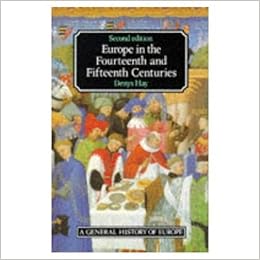


Hmm, I didn’t find it that ‘lively’, and ‘accessible’ to a beginner studying the period like the blurb portrayed it, so how could it be such a ‘great introduction’ to new students as the back cover promised?  In fact, it felt like it was geared towards those who were already very familiar with the era.
 
Basically, it felt like bad advertising, like when you order a product online and the product is not like how it is portrayed in the photos.  Same with fast food advertising!  The food never looks  like its picture. 

BUT we love the taste of fast food anyway, and the 'fast' part they have advertised correctly, even if we fill picture-jipped, right?  MIDDLE POSITION.
 
 
I felt the same about the book, great stuff, but not as portrayed, i.e. as something 'lively and accessible for a beginner', it was a trifle boring to wade through, not 'lively', despite all the really good info, which I did like. 

Well, here is my ‘middling’ review on it, pointing out where it fell flat to me, but ALSO pointing out what other stuff it had that was good, so you get the idea:


***

“As the title suggests, it is a general overview of the late medieval period of Europe, and according to the back cover, has become the standard introduction to that era in universities and colleges. My sympathies to all future history 101 students who are assigned this book in their reading lists. Yes, it is packed with information, but it is dished out in such a general form that after wading through the text from cover to cover, you feel no wiser than before, even for a general introduction, it simply fails to engage the reader ala Froissart.  Perhaps the author tried to fit too much data into a little space, and the chapters are rather short. However, it is useful for searching out informative quotations and factoids for term papers and other research projects. It is more helpful if used simply as an encyclopaedic reference book, for instance, looking up different sections on conditions of trade, religious practises and the church councils, conditions of travel, the arts and culture, the ravages and outcomes of battles, the various successions to the royal thrones of Europe, etc, rather than expect it to be an attention-grabbing read. Several interesting general genealogical tables are included in the appendix, i.e. for the English Royal family, the rulers of Portugal, Castile, Aragon and Navarre, Poland Hungary and Bohemia, the rulers of Naples and Milan, the Medicis, the Scandinavian kingdoms, the German and Holy Roman Emperors, and also the Palaeologi and Ottoman rulers from this period. There are also several maps displaying the political layout of Europe in those times, and an index. I would recommend it as a reference book to thumb through when needed, but that is all.”

***


Now, you see what I didn’t like about the book, BUT, you should also see that I pointed out what else the book contained and might prove helpful to someone for whatever research they need to do.   In fact, there is a lot of information in the book.  In that sense, my middle-of-the-road grumblings become a ‘helpful’ review.

In fact, as I write this, that review on Amazon still has five thumbs up and no thumbs down yet from customers who found my review ‘helpful’, which is the whole point.  Perhaps they might agree with my opinion, and not buy the book, OR, they may see the description I wrote and think, “Hey, this book still has what I need.” 


So, it’s a winner all around: I get what I didn’t like off my chest while not ripping that book to shreds, (a lot of research and work went into after all), and the review proves helpful to someone else by still showing it’s a book that THEY might like even if I personally didn’t find it all it was cracked up to be.

Now, I must warn you, there is a downside  to writing these ‘Middle Star’ reviews, which is a reason why I don’t write many of them just like I don’t write all-out bad reviews: people sometimes don’t see the good points you’ve written, and just seem to focus on the ‘bad’ stuff and think you are still dissing the book outright, when in fact, you aren’t.  They think you’re a meanie!  


The only reason why I’ve ever done two of these middling reviews at all is to show I’m not giving a ‘happy clappy’ four or five star rating on everything I review without due deliberation.  I review books I like, but will give a so-so review every now and again too, which should show people if they look at my public profile I actually think about what I'm writing before I post a review ~ they ARE getting my honest opinion.


However, like I said, people still take the three star thing the wrong way.  I discovered one comment on Amazon from a user named “Mike DePUe, OFS” that said:

“It is worth noting that Eamon Duffy (Saints and Sinners: A History of the Popes; Third Edition (Yale Nota Bene), p. 436), finds this book "invaluable."”


Well, I just left a comment with that:

“Hi! Well, it is invaluable depending on the reader I guess! For facts and figures, statistics, yes, it is very useful, which I did point out. I just found the way the history was present a bit 'dry': as I wrote in the review, I was hoping for a book along the lines of Froissart's chronicles, something which made you feel as if you were transported back then, something that would help me to get a 'flavour' of the cultures, the customs, how people really thought...it depends what you're looking for in a book. :-)”


Yet this didn’t satisfy someone else who saw my review, for another comment popped up from a user called “Santosh”:


“This isn't a very good review at all; it merely states the book does not conform to what the reviewer wanted in a book. Then why did you buy it? Didn't you have any idea what it contained?” 


You gotta be kidding me.

Okay, this testy observation from Santosh was a bit much considering they had only written two reviews on Amazon to date, and not positive ones at that, a one star and a two star review.  Maybe I should have left it alone, but of course, I had to comment:


***

(Me:) “That's odd ~ five of five people so far found the review 'helpful', so if the review explains exactly what is in the book to help other readers make an informed purchase, (whether or not the book was what I was looking for), it is a 'good' review in that sense.

Yes, I had an idea it would be about Europe in the 14th and 15th centuries as the title suggested, (I can read after all), but was disappointed the material was so 'dry' and not 'lively' as it is described on the back cover.

At least, I didn't think so. It is not engaging like Froissart's contemporary chronicles of the Middle Ages, or as another modern-day example concerning Elizabethan England, "The World of Christopher Marlowe" by David Riggs.

Is "Europe in the 14th and 15th Centuries" informative? Yes. Useful? Yes.
Dry and hard to wade through from cover to cover? Yes. You get buried under facts and information. Great for essays and fact-checking. I found it helpful in one or two areas. Does it help keep you *interested* in the period because of said 'dryness'? No, not for me.

One big problem I found: too much important history was generalised into many short chapters, when whole books would be needed to delve into those topics, volumes in fact! Not just a chapter. Perhaps the book is *too* general and the author fit too much in. Two centuries of European history squashed into 450 or so pages? Ambitious.

That's why I give it a middle star rating. If I outright hated the thing, I would have given it one star, but I rarely hate a book! So, in this case, I just stated my opinion, while people can judge from it whether this book is something they can use or not.

(I can't help but think that if anyone actually *reads* my review, they would see all this already.)

Useful review = good review, despite the star rating.”

 ***

There ended my comment.  Well, rising to the bait of a troll wasn’t a complete waste of time in this instance, it did allow me to explain again why I disliked the book plus gave me an opportunity to say good things about the book again.

In all, I think you get the point.  It’s possible to write a three star review so you can mention the few things that bugged you about it, but not trash a book entirely so you can still help an author.   

However, do so at your own risk: you may get reactions from people who can’t seem to *read* what you are actually saying, but if you like to get into bookish debates, go for it! 


You heard the President!

Write a GOOD book review!  And if you simply can't, try to keep your review to a 3 Star and find some good points to say about it.

****

"Boccalini in his 'Adertisements from Parnassus' tells us that Zoilus once presented Apollo a very caustic criticism upon a very admirable book, whereupon the god asked him for the beauties of the work.  He replied that he had only busied himself about the errors. On hearing this, Apollo, handing him a sack of unwinnowed wheat, bade him to pick out all the chaff for his reward." ~ Edgar Allan Poe

Don't be like Zoilus! Find the wheat!


Like my blog?  You'll LOVE my books!  Check them out!  (Click here.)


Sunday, 3 January 2016

Readers, your Opinion Means the World to Us: Write a Book Review!


"Beloved reader? You would be shocked how much regular people will pay attention to you." ~ Kristen Lamb


The following post is an excerpt taken from author Kristen's Lamb's blogpost: The Ugly Truth of Publishing & How BEST to Support Writers (December 2015).

  ~ *~*~*~

"Reviews", by Kristen Lamb

"I get that a lot of people buy used because they are on a budget. Been there so *fist bump*. You can still support writers in meaningful ways.

Even if you buy new, there is another way you can support writers you love. Write a REVIEW. A GOOD ONE.

As a writer I have a personal policy. If I can’t say something good, I shut up. Mainly because I AM far more picky about story being a writer and an editor but also this business is brutal. If we are not supporting each other? Who will? Because our families don’t get us. Our significant others might. Our kids think we are nuts. So I only leave glowing reviews. But that is me. Writers shouldn’t eat their young.

For READERS. Reviews are more important now than ever before, especially for the indie and self-published author. The reason is that with the change in the publishing paradigm, the slush pile (unfortunately) has been dumped into the reader’s lap. There are a lot of bad books out there. But even then, that really isn’t all that big of a problem.

Want to know the bigger problem?

There are a lot of good books out there.

With the Internet and social media and the explosion of books there is SO MUCH content. This means consumers are overwhelmed with choices. Reviews help writers sell books because if readers see a book with no reviews or five reviews versus a similar title with thirty reviews? Who will they choose? Additionally writers gain access to promotional tools like Bookbub, but can ONLY do this with a minimum number of reviews.

Instead of sending me an e-mail about how much my book changed your life? Put it on Amazon and change MINE! 

Readers are essential to our success beyond just the sale. If you love our books, your promotion means a thousand times more than any ad I could pay for. Ads and marketing don’t sell books. Never did and never will. Only thing that sells books is word of mouth.


Beloved reader? You would be shocked how much regular people will pay attention to you. That review is worth your weight in gold to me for a number of reasons. Humans don’t like being first. So unless a couple of you are brave and review? My book can sit with NO reviews and it is then unlikely to sell.
Think about a shelf with ONE item. It freaks us out. There is only ONE. Is it poison?

Secondly, when you review us, Amazon favors our books in the algorithms meaning more people SEE our book. More people SEE it, odds are I will sell more copies. In the on-line world YOU have the power to get US that awesome front of the store book placement. The more reviews the better the algorithm. Better algorithm, more views. More views, more sales, more sales —> we make a best-seller LIST!

You can also use your social media because it means more than ours.
Tweet a picture of our book. Put it on Facebook. People in your network ARE noticing. Peer review and approval is paramount in the digital age. And don’t support your favorite author on Goodreads as a first choice (AMAZON reviews are better).  ..."


***  Okay, I'm interrupting Kristen's post at this point to explain why placing your review on Amazon first is important, (personally I love Goodreads too!) but by the time readers are looking around Amazon, they pretty much have decided that they are ready to buy a book, it is a shopping site after all.

Even if certain shoppers don't want to support Amazon over their local bookstore, they often go there just for the reviews to see if a book is a good choice to spend their money on


Yes, I love Goodreads, but please, also stick up a review on Amazon!

You, dear reader, have the awesome power and opportunity to make our books a success!

It's up to you for the simple reason marketing doesn't work as Kristen Lamb points out, and also because people don't like us authors jabbering on about our books all the time as it is terribly annoying.  (It's like Aunt Betty pinching your cheeks like you were a baby and taking out all the family photos every time you come for a visit, right?)  Not to mention the fact that people expect authors to say nothing but good things about our own publications.  We soon get tuned out and ignored.

So, if books are only successful through word of mouth, reviews are our lifeblood.

It's readers like you who can give a second opinion and thereby encourage others to give a book a chance. 

Okay, back to Kristen's last words on the subject.... 


"Support us on your regular Facebook page or Instagram or Twitter. Because when you post a great new book you LOVED your regular friends see that."

~*~*~*~
 
Yes, and remember Amazon and Goodreads!  Thanks Kristen!

 Yes, we authors really appreciate all our reader's reviews.  Thank you for taking the time to write them.

Read Kristen Lamb's full blog post about the ugly, nitty gritty of the traditional publishing industry: click here.


And....

***
 
If you like my blog, you may LOVE my books!


Wednesday, 9 September 2015

The Oxford Guide to Writing: A Rhetoric and Handbook for College Students ~Book Review


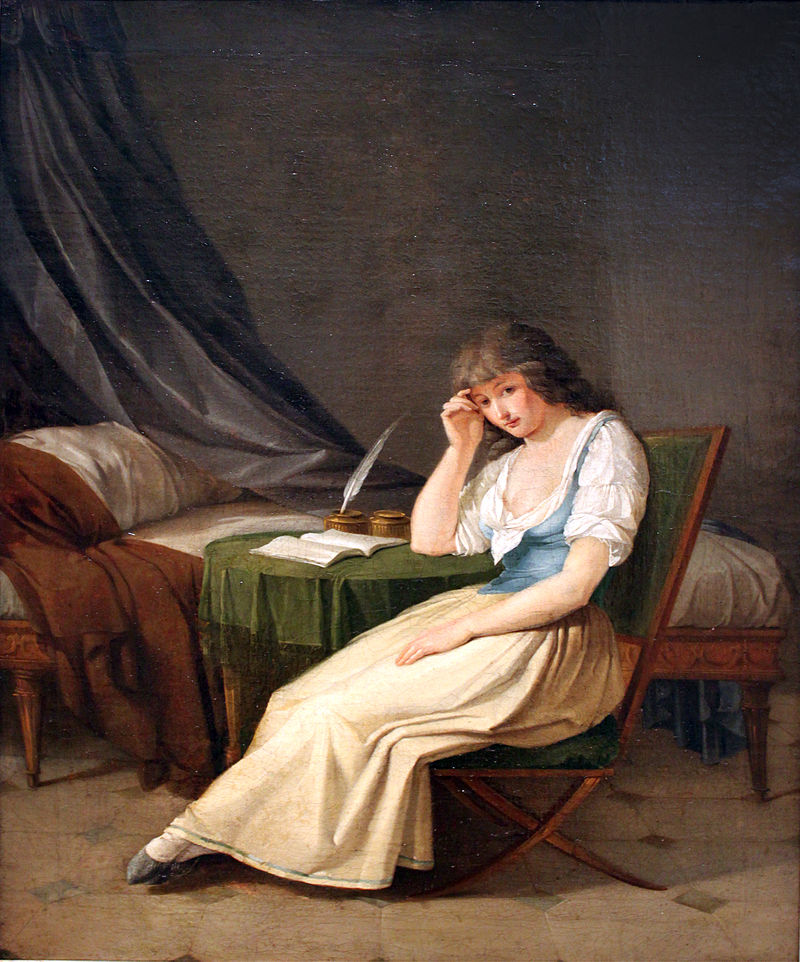
1799 Hetsch Junges Maedchen anagoria.JPGLately I was debating whether or not I should reveal my favourite secret writing tip for my next blog post...well, this isn't it, (I'm still wondering if I should reveal my secret!) but don't fret, until I finally weaken and spill the beans, for now I shall share with you what I believe is one of the best aids of the trade.  Okay, so I've already published it as a book review, but for those of you who may have missed it:

The Oxford Guide to Writing: A Rhetoric and Handbook for College Students by Thomas S. Kane   Hardcover: 848 pages    Publisher: Oxford University Press (February 3, 1983)   ISBN: 9780195032451

(Image: Young girl in morning dress, speculating sitting at a table by Philipp Friedrich von Hetsch, 1758-1839.)


For college students?  This is also for serious writers.

 Many have asked, "How do you learn how to write? Properly, that is?" By this they mean: how does one become a skilled artist of the craft, melding words into classic pieces of prose, fiction, non-fiction, or whatever the specific genre of choice might be. Practise, time, patience are the customary answers, yet the `how' of writing, the basic nuts and bolts are often elusive. Unless you have a firm grasp of the tools available, that is, the art of rhetoric, the development of your own style will flounder. What is rhetoric? It is the ability to write or speak persuasively and effectively, to use language gracefully and with maximum impact. Unfortunately, scuzzy politicians and their empty speeches have maligned the word `rhetoric', but the `Oxford Guide' admirably shows that wonders can be done with the English language with regards to writing when handled by an artist.

This book is an invaluable toolkit for the serious writer who wishes to develop their skills. I stumbled upon it while browsing the library shelves in college and immediately ordered my own copy. Do not be fooled by the title: this is not just for college students! This book continues to serve me well. Yes, it is a big tome, but the chapters and their various sections are beautifully expressed, enjoyable, concise, and most important of all, they are to the point. Sometimes they are quite humorous. Each section ranges from only a few sentences to a paragraph or a page. It is possible to read just a few pages a day with maximum benefit. While there is great attention given to writing essays and the research process for college purposes, the fiction writer will also profit greatly.

At first, the chapters sound horribly dull and technical as you skim through the table of contents, but it is surprising how interesting they are, filled with examples from the publications of famous writers, and other easy to understand diagrams and exercises.

 If you are already an accomplished author, this book is still for you, revision never goes astray. Writing is an ongoing learning process, you may be surprised at how your style may evolve after reading this handbook. You don't have to do the writing exercises if you don't want to, it is amazing the information you absorb, you may be forgiven if you skip them.

 On the other hand, if you are a teacher, this book gives you ample ammunition at the end of each chapter for creative writing assignments.

 To university students, this book is a `must-have', particularly if you are not studying English as a major or minor. Often you will be thrown into the deep end at college and be expected to know how to write essays and term papers on an academic level. Perhaps you may be offered an extra course to help brush up your writing skills for the expected requirements, but be prepared to develop these skills on your own. Let the `Oxford Guide' be your writing mentor.

The amount of information compiled is unbelievable. In addition to a handy reference index in the front of the hard cover for important chapters, there are full indexes in the back, including one for the authors mentioned and the examples taken from their works, not to mention a nifty `Correction Symbols' key inside the back cover explaining all the red ink marks your professor or publishing editor may scrawl over your work during the correction process.

This is an extremely useful book, the only information that is lacking concerns the Internet as a research tool since the `Oxford Guide' was published in the days before the World Wide Web. To conclude, I shall let the Table of Contents speak for itself and recommend that every serious writer whether they be a student, a poet, essayist or novelist, invest in a copy.  It is out of print, but if you take the time to hunt around for a copy, you will be glad that you did.

Introduction
Chapter 1: Truths and Misconceptions about Writing
You Can Learn to Write
Writing is Worth Learning
Good Prose is Recognizable
Correctness Is Not the Essence of Good Writing
Writing Is Different from Talking
Writing Is More Than Simply Finding Words to Fit Ideas
Everybody Has Things to Say

Chapter 2: Basic Considerations: Purpose
Introduction
Subject
Reader
Purpose and Types of Prose

Chapter 3: Basic Considerations: Strategy and Style
Style

Chapter 4: Basic Considerations: Grammar, Usage, and Mechanics
Grammar
Usage
Mechanics
Grammar, Usage, and Style

Part One-The Writing Process
Introduction

Chapter 5: Invention: Gathering
The Commonplace book
The Journal

Chapter 6: Invention: Exploring Ideas
Free Writing
The Analytical Approach
Conclusion

Chapter 7: Outlining
Introduction
The Formal Outline
The Scratch Outline
A Simple Outline
From an Outline Essay

Chapter 8: Drafting and Revising
Drafting
Revising
Final Copy
Conclusion

Part Two-The Essay

Chapter 9: Structure of the Essay: Beginning
Introduction
Announcing the Subject
Limiting the Subject
Indicating the Plan of the Essay
Interesting the Reader
A Word about Titles
Conclusion

Chapter 10: Structure of the Essay: Closing
Summary and Conclusion
Termination
Conclusion

Chapter 11: Structure of the Essay: Organizing the Middle
Signposts
Inter-Paragraph Transitions

Chapter 12: Tight and Loose Organization
Introduction
Tight Organization
Loose Organization

Chapter 13: Point of View, Persona, and Tone in the Essay
Point of View
Persona
Tone

Part Three- The Expository Paragraph
Introduction

Section I - Basic Structure

Chapter 14: The Sentence in the Paragraph

Introduction
The Topic Sentence
Sentences as Analytical Elements

Chapter 15: Paragraph Unity
Introduction
Coherence
Paragraph Flow

Section II- Methods of Development

Chapter 16: Paragraph Development: Illustration

Introduction
Illustration

Chapter 17: Paragraph Development: Restatement
Simple Restatement
Negative-Positive Restatement
Specification

Chapter 18: Paragraph Development: Comparison and Contrast
Focusing a Comparison or Contrast
Organizing a Comparison or Contrast
Developing the Comparison or Contrast
Conclusion

Chapter 19: Paragraph Development: Analogy
Introduction
Analogy as Clarification
Analogy as Persuasion
Conclusion

Chapter 20: Paragraph Development: Cause and Effect
Cause
Effects
Cause and Effects

Chapter 21: Paragraph Development: Definition
Kinds of Definition
Modes of Defining

Chapter 22: Paragraph Development: Analysis or Classification
Analysis of Abstractions
Analysis of a Process

Chapter 23: Paragraph Development: Qualification
Section III- Variations and Complexities

Chapter 24: Variations in the Topic Sentence and in Paragraph Unity
Delaying the Topic Sentence
Implying the Topic Sentence
Figurative Unity

Chapter 25: Paragraph Patterns
Introduction
The Lineal Paragraph
The Ramifying Paragraph
The Circular Paragraph
The Loose Paragraph

Chapter 26: Sentence Patterns in the Paragraph
Introduction
Similarity in sentence Pattern
Variety in Sentence Structure
Conclusion

Part Four - The Sentence
Introduction

Section I- The Grammatical Types of Sentences

Chapter 27: The Simple Sentence

Introduction
The Awkward Simple Sentence
The Effective Simple Sentence

Chapter 28: The Compound Sentence
Awkward Coordination
Overcoordination
Use Parataxis

Chapter 29: The Complex Sentence
Subordinate Ideas of Lesser Importance
Do Not Subordinate Ideas of Primary Importance
Reduce Subordination to the Briefest Form that Clarity Requires
Arrange Subordinate Constructions in Natural Order if Possible
The Compound-Complex Sentence

Chapter 30: The Fragment
The Detached Adverbial Clause
The Detached Participle
The Detached Adjectival Clause
The Verbless Statement

Section II - Sentence Style

Chapter 31: The serial Sentence

Introduction
The Segregating Style
The Freight-Train Sentence
The Cumulative Sentence

Chapter 32: Parallel and Balanced SentencesIntroduction
The Parallel Sentence
The Balanced Sentence
Summary

Chapter 33: Hierarchic Structure
Introduction
The Loose Sentence
The Periodic Sentence
The Convoluted Sentence
The Centered Sentence

Chapter 34: Sentence Patterns: Summary

Chapter 35: Concision in the Sentence
Introduction
Use Single Adverb or Adjective
Avoid Awkward Anticipatory Constructions
Use Colon or Dash
Use Ellipsis
Use Parallelism
Use Participles
Use Predicate Adjectives
Do Not Waste the Subject, Verb and Object

Chapter 36: The Emphatic Sentence
Introduction
Announcement
Balance
The Fragment
The Imperative Sentence
The Interrupted Sentence
The Inverted Sentence
Negative-Positive Restatement
The Periodic Sentence
The Rhetorical Sentence
Rhythm and Rhyme
The Short Sentence

Chapter 37: Emphasis within the Sentence
Adjectives
Ellipsis
Isolation
Mechanical Emphasis
Polysyndeton and Asyndeton
Position
Repetition

Chapter 38: Variety in Sentence
Introduction
Vary Length and Pattern
Fragments
Rhetorical Questions
Varied Openings
Interrupted Movement

Chapter 39: Rhythm in the Sentence
Introduction
Effective Rhythm
Awkward Rhythm
Metrical Runs
Rhythmic Breaks
Mimetic Rhythm
Rhyme
Summary

Part Five- Diction
Introduction

Section I .- The Question of Meaning

Chapter 40: Meaning

Words Are Not Endowed with Fixed `Proper' Meanings
Denotation and Connotation
Levels of Usage
Telic Modes of Meaning
Conclusion

Section II -Problems of Diction

Chapter 41: Wrong Words

Introduction
Too Abstract
Ambiguity
Barbarism
Clarity
Cliché
Colloquialism
Connotation
Denotation
Awkward Figure of Speech
Too General
False Hyperbole
Wrong Idiom
Jargon
Meaning?
Pretentious Diction
Repetitiousness
Awkward Sound

Chapter 42: Unnecessary Words
Introduction
Overlong Connective
Unnecessary Definition
Distinction without Difference
Word Is Too General
Obvious by Implication
Wordy Modification
Wordy Passive
Overqualification
Redundancy
Scaffolding
Undeveloped Ideas
Too Many Verbs

Section III - Figurative and Unusual Diction

Chapter 43: Figurative Language

Introduction
Similes
Metaphor
Personification
Allusions
Irony
Overstatement and Understatement
Puns
Zeugma
Imagery

Chapter 44: Unusual Words and Collocations
Introduction
Unusual Words
Unusual Collocations

Section IV - Improving Your Vocabulary

Chapter 45: Dictionaries and Thesauri

Introduction
General Dictionaries
Special Dictionaries: Thesauri

Part Six- Description and Narration

Chapter 46: Description
Introduction
Objective Description
Subjective Description
Process Description

Chapter 47: Narration
Introduction
Organizing a Narrative
Meaning of a Narrative
Point of View and Tone in a Narrative

Part Seven - Persuasion

Introduction
The Nature of Persuasion
Kinds of Persuasion

Chapter 48: Argument
Introduction
Deductive Argument
Induction
Refutation and Concession
Composing an Argument

Chapter 49: Persuasion: Nonrational Modes
Introduction
Satire
Eloquence
Pathos
Ethos, Style, and the Audience
Emotional Fallacies
Table of Fallacies

Part Eight - The Research Paper and the Discussion Answer

Chapter 50: Gathering, Quoting, and Citing Information
Introduction
Using the Library
Taking Notes
Incorporating Notes into Your Paper
Footnotes
The Bibliography

Chapter 51: A Sample Research Project
Choosing a Topic
Looking for Sources
Organizing Your Notes
Writing the Paper

Chapter 52: Answering Discussion Questions

Part Nine- Punctuation

Introduction
The Purpose of Punctuation
`Rules' of Punctuation
The Two Categories of Punctuation

Chapter 53: Stops

The Period
The Question Mark
The Exclamation Point
The Colon
The Semicolon
The Comma
The Dash

Chapter 54: The Other Marks
The Apostrophe
The Quotation Mark
The Hyphen
Parentheses
Brackets
The Ellipsis
Diacritics
Underlining
Capitalization

Reference Grammar

Reference Grammar Contents
Introduction

Parts of Speech: Verbs, Nouns, Pronouns, Adjectives, Adverbs, Prepositions, Conjunctions, Interjections

The Grammar of the Sentence
Definitions, Subjects, Complements, Objects of Propositions, Adjectivals, Adverbials, Absolutes, Murky Modifiers, Problems in Agreement


***
 
Like my blog? You will LOVE my books!


Wednesday, 2 September 2015

What Do We Do with a Bad Review?

(Post orginally published June 2012)

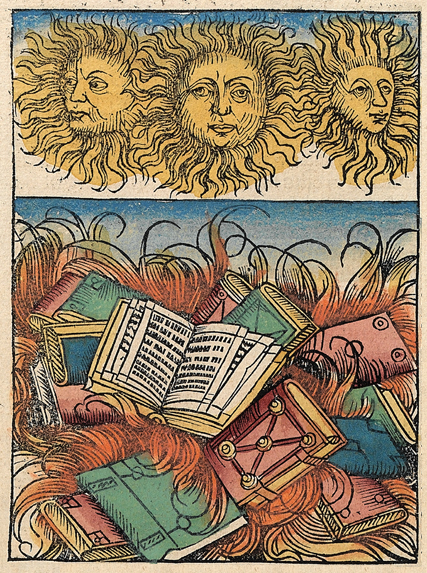
Nuremberg chronicles f 092v 1.png 
(Image from the Nuremburg Chronicle 1493, three suns observe a book-burning.


If you are an author, you will at one point or another be presented with a bad if not scorching review of your work. Quite possibly, you may receive an equal amount of negative criticisms and evaluations of your cherished creations in proportion to all the good reviews you receive. Hopefully, you will not receive more bad reviews than good!

How do we address the distressing reality of unjust criticism? The general rule has been to accept everyone is entitled to their opinions, be they good, bad, or incorrect, and simply ignore their bad comments. However, there are times when reviews are completely erroneous they leave us wondering if the reviewer had actually read the book and could comprehend its contents. Or, might we dare suggest, are deliberately condemning a work for some unknown ulterior motive? I have read reviews on other people's work that I had studied and the results were totally perplexing, (the reviewer reporting the author failed to address topics or issues when they had, or completely missed that author's point etc.), and now I too have fallen prey to the poison pen, or at least, a misguided one.

Must we authors stay silent, or are we entitled to defend our work and beat back the flames of unjust criticism?   In the case of an academic review, I think we may, since are academics are expected to be adept readers.  With your permission, I offer you an example below: a review of my work, Faust: My Soul Be Damned for the World Volume 1 , written by Nicholas Holland for Folklore, the Journal of the Folklore Society UK, published March / April 2012. My defense is presented in Italics.

~~~

“E.A. Bucchianeri's book, the first of a two-volume study, surveys works concerned with the famous magician Doctor Faustus from the earliest German notices to Christopher Marlowe's eponymous play. A short final section discusses seventeenth-century and eighteenth-century works before Goethe. The first chapter reviews German accounts of Faustus prior to the earliest known version of the German Faust Book, and places a particular emphasis on the search for biographical evidence about the historical Faustus. Bucchianeri surveys the various early accounts, including those of Trithemius, Melanchthon, and Weyer. The majority of the material covered will be familiar from other modern studies, but whereas the studies of Frank Baron, for example, draw out the complexities of the relationship between historical evidence and the subsequent fashioning of the legend, this study tends to place great emphasis on searching for insight into the biography of the historical Faustus; an approach that can be detrimental to the consideration of the sources surveyed in their historical context.”


(I tend to place more emphasis on the biography? Of course, we cannot see how the folklore developed without arriving at a clear picture of Faustus, this historical man of mystery. To all intents and purposes, I followed Baron's analytical example in discovering the historical Faustus, and offered additional findings / observations to the material Baron provided and discussed. The chapter dealing with Faustus' biography is only one quarter of Volume I, (125 pages) and roughly half of this chapter also examines the legend-formation process. The rest of Volume I (nearly 400 pages), features the Faust folklore / literature. Holland then declares in so many words it is 'detrimental' to piece together a biography of Faustus from the sources that exist and that I did not consider their historical context. Did Mr. Holland actually read and comprehend my work? ~ E.A.B.)


“For example, when considering the account of the famous abbot and philosopher Trithemius that Faustus declared himself the source of the necromancers, Bucchianeri's bewilderment that Faustus "would freely choose a profession that would utterly ruin his reputation" (p. 28) seemingly takes Trithemius's report at face value. Trithemius's opinions concerning Faustus surely demand more cautious consideration in the light of his own possible motivations, reputation, and interests; in particular since so little concerning the historical Faustus and his magical practices can confidently be corroborated using other sources. More generally, Bucchianeri's biographical focus in the early part of the book tends to direct the reader's attention away from what must be the most significant and astonishing aspect of the documentary legacy: the impact, durability, and openness to further interpretation of the legend of Faustus through the sixteenth and early seventeenth centuries, first in German and later in English culture. Whereas the historical Faustus is an almost invisible footnote in early modern intellectual history, the legend of Faustus became, in the hands of a number of important writers, a means of expressing early modern interest concerning both the potential power and also the potential dangers of magic.”


(I could find no evidence presented to date to doubt Trithemius' letter written to a friend and colleague, warning him to be wary of Faustus. The letter was reprinted during Faustus' lifetime, it could not be a bogus document. Trithemius may have aggrandized Faustus' claims concerning his magic skills, but this topic is discussed in detail. Faustus was known to declare himself a "necromancer" according to well-documented historical sources, therefore, according to the historical evidence, Trithemius was accurate in describing Faustus. I have examined the content of Trithemius' letter minutely from all aspects, similar to Frank Baron. To declare oneself a 'necromancer' was a serious matter in those times, Faustus could have been tried and executed. Why take such a risk? His motives had to be questioned, and these questions hypothetically answered. I find it curious Mr. Holland believes the biographical material in Volume I detracts from the efforts to describe the "impact" and the "openness to further investigation" of the legend: as I said, three quarters of Volume I (about 400 pages) explores the rich Faustian material inspired by his legend over the centuries and how it was used to deter people from studying magic in addition to admonishing people to live good Christian lives. Holland's conclusion that I digressed from explaining the "early modern" fascination and fear of black magic is erroneous. ~ E.A.B.)


“The remainder of the volume is mostly dedicated to substantial descriptive accounts of the German and English Faust books, and of Marlowe's Doctor Fautus. Bucchianeri's major new proposition concerning the latter is that the B-text shows that "Marlowe had regained a considerable measure of the defiant 'Machiavellian' optimism", which was absent from the A-Text (p. 368). Although precisely what she means by "Machiavellian" (or "liberal Epicurean," a phrase she applies to Marlowe's Faustus in the same passage) is unclear, her reading of the play evidently belongs to the school of interpretations which considers the overarching admonitory message of the play as being in some way questioned by the manner of its presentation. However, her core interest again is in trying to establish firm connections between biography and text. Her proposal is that the B-text of the play is a revision of the A-text chiefly undertaken by Marlowe himself in the light of personal experiences and historical events that enable it to be dated to 1592. This is an unusually precise stance concerning the genesis and authorship of this text, but ultimately fails to persuade. For example, some basic textual evidence seems to conflict with such a precise and confident dating. The author argues, in particular, that the references to the Anti-Pope Bruno in the B-Text are inspired by news of the arrest of Giordano Bruno in Venice in 1592. However, if a similar method is applied to the reading of two of the most striking points of similarity between the fictional Bruno and the historical Bruno, these events have no direct connection to 1592. The fictional Bruno undergoes excommunication, a punishment which the historical Bruno stated to his interrogators in Venice he knew had been imposed on him in absentia by a hearing convened by the Dominicans in Naples prior to this period in England (1583-5). The execution by burning for heresy, pronounced on the fictional Bruno by Faustus in disguise, was visited on the historical Bruno as late as 1600, seven years after Marlowe's death. While there is a case to be made for the influence of the historical Bruno's person and thought on Marlowe via the circle of Earl of Northumberland, there is in fact nothing tangible to link the scene in Doctor Faustus more strongly to the news of 1592 than to the news of any other year of a period spanning the whole of Marlowe's writing career. Furthermore, by attempting to bind the play's genesis too tightly to Marlowe's biography, the author underestimates not only the imaginative capacities of Marlowe himself and of the other writers who most probably had a hand in the B-Text, but also the uncertainties that cloud our understanding of Marlowe's personal beliefs. Such an approach also fails to place sufficient emphasis on the need to understand the contents of Doctor Faustus in the context of the early modern performance traditions upon which it draws.”


(The terms "Machiavellian" and "Epicurean" may be on the same page, but not in the same paragraph. From the context of the study, Holland should have understood the term "machiavellian" to mean Faustus' thirst for power and his determination to acquire it by whatever means or cost. The philosophical term Epicurean was explained in the first chapter, but possibly Holland forgot: "... pleasure is the supreme goal one should aim for in life, particularly intellectual pleasures above those of sensual ones. Epicurus taught that one could only acquire true happiness and serenity by conquering one’s fear of the gods, death, and the afterlife. He also believed that humans ceased to exist after death, declaring the soul died with the body." The term was referred to in this philosophical context throughout the chapter on Marlowe, and we note Faustus in Marlowe's play begs his soul to dissolve at death. The context of Epicurean should have been clear from the beginning.

I am sorry if my argument concerning the dating of the A and B Texts "failed to persuade" Mr. Holland, but I notice he discussed only one piece of evidence I presented, and omitted to mention all other observations pertaining to the 1592 date. If it was a matter of that one detail, Bruno's arrest, then there would not be enough evidence, but a good detective should look at all the evidence presented.

I also notice Mr. Holland points out every historical detail of the the real Bruno, and how this factual information does not match the action of Marlowe's play: must everything in the drama display historical fact? Surely, Marlowe had the creativity to imagine the scene of Bruno's arrest and make artistic predictions concerning the possible outcome of that event, even if they proved incorrect in the future. In this instance, Holland has failed to follow his own conclusion and has committed the same supposed 'error' he condemns me for, that is, trying to find the historical details that correspond with Marlowe's biography and are included in the play ~ let us note that Holland's states "by attempting to bind the play's genesis too tightly to Marlowe's biography, the author underestimates not only the imaginative capacities of Marlowe himself and the other writers who most probably had a hand in the B Text". In so many words, Holland has proposed that authors, playwrights and artists are uncreative and unimaginative when they draw upon their life experiences, (and therefore, contemporary history), for their material. Interesting observation, Mr. Holland.

He also says by binding the play´s genesis too closely to Marlowe's biography, I also "underestimated the uncertainties" that cloud everyone's understanding of Marlowe's personal beliefs. Not so. It was due to these uncertainties I conducted a close reading of Doctor Faustus with Marlowe's known biography. I simply examined the claims Marlowe was an "atheist" in that he did not believe in the established Christian religions, and noted how these claims may have a basis in fact through a close reading of Doctor Faustus. I endeavoured to shed some light on the accusations levied against Marlowe, and if possible, display how close the creative soul of the writer is to his work. ~ E.A.B)


“The stated aim of this study is to provide a "comprehensive exploration" of Faustus and his legacy. It provides lengthy descriptive discussion of the contents of the texts surveyed and, to some extent, it offers a useful single point of reference for them, although it must also be noted that the author's digressive style makes it relatively hard to read. As a work of analysis, however, its most serious failing is that it does not examine more fully and in a more systematic way the complex forces that worked to shape the legend of Faustus within a wider cultural context, and instead places its primary focus on an attempt to find close relationships between biography and text. As a consequence, it fails to offer readings of the material under consideration which have the depth of insight or nuance of the most valuable works already written on the various works it surveys.”


(The aim of this study was to provide "a comprehensive exploration of Dr. Faustus, the man who sold his soul to the devil, and those who lived to tell his tale" ~ so yes, providing detailed explanations of the texts and why each author presented the Faust material as they did was the object of the work. I do not see how Holland thinks this does not present the "complex forces" that shaped the legend of Faustus, when everything from religious intolerance, the Reformation, academic competition, fear of black magic, the scientific discoveries of the day such as the Copernican / Galileo controversy, folklore and history, and how they were included in the Faustian tales, are discussed. Can the "cultural context" become any wider? If this study lacks "the depth of insight or nuance of the most valuable works" already written on the subject of Faust and Faustian literature, I shall leave it to you, the reader, to discover if this be true or not. I thank Mr. Holland for his review, albeit it took nearly four years for it to appear from the time the paperback edition was published and sent in for review. E.A.B.)

~~~

Faust  My Soul Be Damned for the World Volume 1 by E.A. Bucchianeri 

Tuesday, 1 September 2015

Brushstrokes of a Gadfly ~ Book Review

(Post originally published December 20, 2011)

A big thank you to Randall Radic for the following review published on Blogcritics.org.
What a wonderful Christmas gift!

(Following review published December 19, 2011.)

"According to Webster’s Unabridged Dictionary, a gadfly is “an insect that goads or stings cattle, as a horsefly. A person who annoys or irritates others.” Supposedly, the Greek philosopher Socrates was a gadfly because he irritated others by causing them to analyze their thought processes. Inevitably, analysis revealed errors of not only reasoning but conclusions – mental boo boos. Rather than rejoicing over their newfound enlightenment, people became upset. People don’t like being told they are wrong or stupid or illogical. So they began avoiding Socrates like the plague, along with talking about him behind his back, saying nasty things about him. But Socrates didn’t care. He considered it his duty to be an irritant, a gadfly. So he kept doing it. In the end, he annoyed so many people so much that they decided to do something about it. It wasn’t pleasant.

Jesus was a gadfly too.

So is the protagonist of Brushstrokes of a Gadfly, a wonderful, walloping novel by E.A. Bucchianeri. Katherine Walsingham is the star of Brushstrokes. She is beautiful, talented, intelligent, sensual, and comes from an affluent, well-bred family in New York City. Kat’s only flaw is that she enjoys stirring the pot. She doesn’t believe in going along to get along. Thus, she utilizes her art to cause viewers to re-evaluate their conclusions about religion, cultural traditions, nuclear power, women’s rights, government corruption, and the true definition of freedom. Naturally, Kat receives lots of attention, while at the same time annoying lots of people, people who prefer the status quo to remain stationary.


Brushstrokes of a Gadfly
The pedantry of Katherine is obvious, as she tries to set the world to rights. What’s funny is that while Kat is busy being a gadfly, the pedantry of Life wiggles in and disrupts Kat’s vision for her future. Determined to eschew romantic entanglements because of their destabilizing effects, Kat unexpectedly finds herself falling in love with one of New York’s most eligible bachelors. Because of a peculiar combination of circumstances – Kat’s reluctance, her paramour’s family, and gossip – the romance appears headed for disappointment.


Whether or not Life and Love find a way won’t be discussed. You’ll have to read the book to find out.

Essentially, Brushstrokes is a high literary romance novel. Imagine Roberto Bolano meets Nicholas Sparks: erudite and gracious with a saccharine undertone of romance and the unpredictability of life. In other words, it’s exaggerated, quaint, absurd, funny, touching, and very much like reality.

E.A. Bucchianeri guides the reader through all the twists and turns of the story with remarkable aplomb, utilizing what the reviewer calls “an informed literary style.” Translation: easy to read, yet without all the dreary flatness that inhabits most ‘high literary’ novels. The story sparkles with various subplots and unique characters – stories within the story – that provide diversion and respite from the primary thread of romantic tension. The reviewer’s favorite is Kat’s grandfather, who, having avoided the psychological pitfalls of great wealth, speaks from his heart, which he wears on his sleeve.

Brushstrokes of a Gadfly is a big book, weighing in at a couple of pounds and 1040 pages. Just looking at it makes a potential reader pause and consider. However, any doubts may be set aside. After the first two pages, you’ll be pleased with your purchase. It’s long, but it has everything you’re looking for: humor, love, human interrelations, good writing, a plot that moves along, and emotional catharsis."

Brushstrokes of a Gadfly


Download Free Preview from Scribd

Where to get your copy, click here.

Tuesday, 4 August 2015

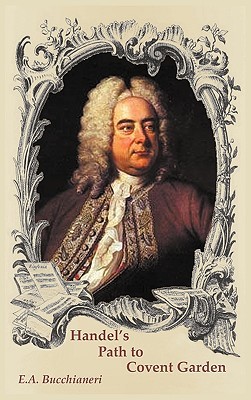
Handel's Path to Covent Garden: Book Review

(Post originally published February 10, 2011)


A big thank you to Randall Radic for posting the following review on BlogCritics.org about my work,  Handel's Path to Covent Garden.


 "Most music lovers go ga-ga over Handel’s famous oratorio ‘Messiah,’ as well they should. However, what most music lovers don’t know is that Handel established his fame upon the bedrock of Italian opera. Handel wrote many operas. During one twelve month span, while at the Royal Academy of Music, Handel wrote three operas, Giulio Cesare, Tamerlano, and Rodelinda. All three were big hits and wildly successful at the box office.

In 1728, just as Handel’s contract with the Royal Academy expired, Italian opera fell out of vogue. The listening public decided they preferred the English style of opera. Still, Handel kept the faith. He started a new company, going into partnership with John Jacob Heidegger, who was the manager of King’s Theatre in Haymarket. Handel and Heidegger continued to produce Italian operas successfully for a few years. Then in 1733, a rival opera company – the Opera of the Nobility – opened for business, bringing in such superstars as Johann Adolf Hasse, Nocolo Porpora, and Carlo Boschi, who was better known as Farinelli. Handel and Heidegger couldn’t vie with such big names. Their venture effectively failed and Handel and Heidegger parted ways.

Instead of retiring, as most thought he would, Handel moved on to Covent Garden, where he joined up with John Rich. For three years, the two impresarios struggled financially and artistically. This period of adversity – from 1734 to 1737 – and how it changed Handel’s life, career, and fortune is the subject of E.A. Bucchianeri’s remarkable book, Handel’s Path to Covent Garden.

Buccianeri examines the intrigues, back stabbings, jealousies, and rivalries that existed at the Royal Academy of Music. The examination reveals that, as in today’s music world, egos and money are greater motivators than musical expression. To put it simply, everyone was caught up in power plays, trying, like a bunch of spoiled brats, to get their way. It makes for amusing reading, especially as it took place almost 300 years ago.


Of particular interest is John Rich’s arrangement with Handel. According to Bucchianeri, unlike most people in his position, John Rich wasn’t motivated by ego or money. “Rich aspired to succeed in overcoming the deficiencies in Italian opera.” Therefore, Rich disregarded “a practical business approach on this one project, he may have decided to afford every opportunity to Handel,” who he recognized as England’s “best composer.”

The result of this “opportunity” was Handel’s growth and change as a composer. Bucchianeri relates this adaptation in detail, using the evolution of Handel’s opera Ariodante’ to illustrate Handel’s genius and creativity. For one thing, Ariodante had no magical content, which meant it was neither heroic nor anti-heroic. In other words, Handel was doing something totally different. The difference wasn’t shocking or scandalous. It was simply unique. And, according to Bucchianeri, this distinctiveness eventually found its way into Handel’s oratorios.

What makes Handel’s Path to Covent Garden so much fun to read is the author’s scholarship and the author’s ability to express that same erudition in simple language. In other words, although Bucchianeri does occasionally get technical, Handel’s Path to Covent Garden is a book for the average Joe or Susie. One doesn’t have to have a musical background or a doctorate to enjoy the book. At the same time, the book is just technical enough to appeal to music lovers. For the latter group, the book fills in a gap surrounding Handel’s life and work.

On the Read-O-Meter, which ranges from 1 star (terrible) to 5 stars (delightful), Handel’s Path to Covent Garden comes in at 5 stars.


Handel's Path to Covent Garden


Download free chapter preview on Scribd

Where to get your copy, click here.