Whatever curious and interesting subject strikes my fancy, be it silly or serious, gets posted for your reading pleasure.
Showing posts with label writing style. Show all posts

Monday, 18 April 2016

How to Write a HELPFUL ‘Bad’ Book Review

In a previous blog post, Do You Know You Have a Superpower? I nagged everyone about the importance of taking the time to write a good book review if you liked a book as reviews help an author immensely, however, I  left you all hanging with the promise of how to write something quite different ~ the ‘Good’ Bad Book Review.

So, now I’m keeping my promise and won’t leave you hanging any longer. 


To recap, good reviews are important, and we authors really appreciate them, but then, what if you the reader didn’t like a book?


First off, I’ll remind everyone that pumping out a lot of bad reviews is not a good thing to do. 

If you write a lot of bad reviews, your public profile on whatever site you like to post your reviews will end up looking awful and cast YOU in a bad light...you will come across as a sourpuss troll who doesn’t like anything and will find fault with everything.  It’s one of the reasons why I don’t like to post anything below a three star review, and very few three-star reviews at that. 


As I said before, you can kill a book faster by your silence than by writing a bad review.

So if you want to spare someone else from wasting their hard earned cash on what you think is a bad book, just don’t say anything about it.  Bad reviews can backfire and actually make people curious about why the book is sooooo bad, and they end up buying the thing anyway, which is what you trying to save them from in the first place.

Okay, from that angle a few bad reviews might help an author too, but frankly, if you can’t say something nice, write something helpful along with your grumblings ~ go for a three star thing.

This is how you can save yourself from looking like a meanie sourpuss online, help people discover if it is still a book they want, and help an author discover their weaknesses, while yet helping to promote their book without destroying their work entirely. Notice the keyword? HELP.

  Yes, it still helps!


Just give it three stars, (don’t go under that amount) and write a ‘middling review’, or to look at it in a more positive light ~ a ‘helpful’ bad book review.  In that way, it ends up being a good review despite whatever flaws you saw in it, and doesn’t burn the book entirely.

How do you do that?

1)      Describe the book, plus what you didn’t like, (no plot spoilers please), then...

2)      DO include things that still may reading it worthwhile, even if it wasn’t quite what you were looking for. Find some of the silver lining and include it in your review.

I’ll give an example of a ‘Middling’ 3 star review I wrote.

Way back in college, I had to read a few of books on Medieval and Early Modern history during an introduction course on Medieval music, just to get a feel for the period.  One book on the list which we the students were encouraged to read was what was described on the back cover as  a “lively” and accessible, and is ‘used as an introduction’ to the period: “Europe in the Fourteenth and Fifteenth Centuries” by Denys Hay.
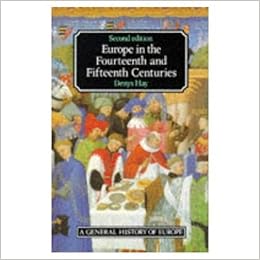


Hmm, I didn’t find it that ‘lively’, and ‘accessible’ to a beginner studying the period like the blurb portrayed it, so how could it be such a ‘great introduction’ to new students as the back cover promised?  In fact, it felt like it was geared towards those who were already very familiar with the era.
 
Basically, it felt like bad advertising, like when you order a product online and the product is not like how it is portrayed in the photos.  Same with fast food advertising!  The food never looks  like its picture. 

BUT we love the taste of fast food anyway, and the 'fast' part they have advertised correctly, even if we fill picture-jipped, right?  MIDDLE POSITION.
 
 
I felt the same about the book, great stuff, but not as portrayed, i.e. as something 'lively and accessible for a beginner', it was a trifle boring to wade through, not 'lively', despite all the really good info, which I did like. 

Well, here is my ‘middling’ review on it, pointing out where it fell flat to me, but ALSO pointing out what other stuff it had that was good, so you get the idea:


***

“As the title suggests, it is a general overview of the late medieval period of Europe, and according to the back cover, has become the standard introduction to that era in universities and colleges. My sympathies to all future history 101 students who are assigned this book in their reading lists. Yes, it is packed with information, but it is dished out in such a general form that after wading through the text from cover to cover, you feel no wiser than before, even for a general introduction, it simply fails to engage the reader ala Froissart.  Perhaps the author tried to fit too much data into a little space, and the chapters are rather short. However, it is useful for searching out informative quotations and factoids for term papers and other research projects. It is more helpful if used simply as an encyclopaedic reference book, for instance, looking up different sections on conditions of trade, religious practises and the church councils, conditions of travel, the arts and culture, the ravages and outcomes of battles, the various successions to the royal thrones of Europe, etc, rather than expect it to be an attention-grabbing read. Several interesting general genealogical tables are included in the appendix, i.e. for the English Royal family, the rulers of Portugal, Castile, Aragon and Navarre, Poland Hungary and Bohemia, the rulers of Naples and Milan, the Medicis, the Scandinavian kingdoms, the German and Holy Roman Emperors, and also the Palaeologi and Ottoman rulers from this period. There are also several maps displaying the political layout of Europe in those times, and an index. I would recommend it as a reference book to thumb through when needed, but that is all.”

***


Now, you see what I didn’t like about the book, BUT, you should also see that I pointed out what else the book contained and might prove helpful to someone for whatever research they need to do.   In fact, there is a lot of information in the book.  In that sense, my middle-of-the-road grumblings become a ‘helpful’ review.

In fact, as I write this, that review on Amazon still has five thumbs up and no thumbs down yet from customers who found my review ‘helpful’, which is the whole point.  Perhaps they might agree with my opinion, and not buy the book, OR, they may see the description I wrote and think, “Hey, this book still has what I need.” 


So, it’s a winner all around: I get what I didn’t like off my chest while not ripping that book to shreds, (a lot of research and work went into after all), and the review proves helpful to someone else by still showing it’s a book that THEY might like even if I personally didn’t find it all it was cracked up to be.

Now, I must warn you, there is a downside  to writing these ‘Middle Star’ reviews, which is a reason why I don’t write many of them just like I don’t write all-out bad reviews: people sometimes don’t see the good points you’ve written, and just seem to focus on the ‘bad’ stuff and think you are still dissing the book outright, when in fact, you aren’t.  They think you’re a meanie!  


The only reason why I’ve ever done two of these middling reviews at all is to show I’m not giving a ‘happy clappy’ four or five star rating on everything I review without due deliberation.  I review books I like, but will give a so-so review every now and again too, which should show people if they look at my public profile I actually think about what I'm writing before I post a review ~ they ARE getting my honest opinion.


However, like I said, people still take the three star thing the wrong way.  I discovered one comment on Amazon from a user named “Mike DePUe, OFS” that said:

“It is worth noting that Eamon Duffy (Saints and Sinners: A History of the Popes; Third Edition (Yale Nota Bene), p. 436), finds this book "invaluable."”


Well, I just left a comment with that:

“Hi! Well, it is invaluable depending on the reader I guess! For facts and figures, statistics, yes, it is very useful, which I did point out. I just found the way the history was present a bit 'dry': as I wrote in the review, I was hoping for a book along the lines of Froissart's chronicles, something which made you feel as if you were transported back then, something that would help me to get a 'flavour' of the cultures, the customs, how people really thought...it depends what you're looking for in a book. :-)”


Yet this didn’t satisfy someone else who saw my review, for another comment popped up from a user called “Santosh”:


“This isn't a very good review at all; it merely states the book does not conform to what the reviewer wanted in a book. Then why did you buy it? Didn't you have any idea what it contained?” 


You gotta be kidding me.

Okay, this testy observation from Santosh was a bit much considering they had only written two reviews on Amazon to date, and not positive ones at that, a one star and a two star review.  Maybe I should have left it alone, but of course, I had to comment:


***

(Me:) “That's odd ~ five of five people so far found the review 'helpful', so if the review explains exactly what is in the book to help other readers make an informed purchase, (whether or not the book was what I was looking for), it is a 'good' review in that sense.

Yes, I had an idea it would be about Europe in the 14th and 15th centuries as the title suggested, (I can read after all), but was disappointed the material was so 'dry' and not 'lively' as it is described on the back cover.

At least, I didn't think so. It is not engaging like Froissart's contemporary chronicles of the Middle Ages, or as another modern-day example concerning Elizabethan England, "The World of Christopher Marlowe" by David Riggs.

Is "Europe in the 14th and 15th Centuries" informative? Yes. Useful? Yes.
Dry and hard to wade through from cover to cover? Yes. You get buried under facts and information. Great for essays and fact-checking. I found it helpful in one or two areas. Does it help keep you *interested* in the period because of said 'dryness'? No, not for me.

One big problem I found: too much important history was generalised into many short chapters, when whole books would be needed to delve into those topics, volumes in fact! Not just a chapter. Perhaps the book is *too* general and the author fit too much in. Two centuries of European history squashed into 450 or so pages? Ambitious.

That's why I give it a middle star rating. If I outright hated the thing, I would have given it one star, but I rarely hate a book! So, in this case, I just stated my opinion, while people can judge from it whether this book is something they can use or not.

(I can't help but think that if anyone actually *reads* my review, they would see all this already.)

Useful review = good review, despite the star rating.”

 ***

There ended my comment.  Well, rising to the bait of a troll wasn’t a complete waste of time in this instance, it did allow me to explain again why I disliked the book plus gave me an opportunity to say good things about the book again.

In all, I think you get the point.  It’s possible to write a three star review so you can mention the few things that bugged you about it, but not trash a book entirely so you can still help an author.   

However, do so at your own risk: you may get reactions from people who can’t seem to *read* what you are actually saying, but if you like to get into bookish debates, go for it! 


You heard the President!

Write a GOOD book review!  And if you simply can't, try to keep your review to a 3 Star and find some good points to say about it.

****

"Boccalini in his 'Adertisements from Parnassus' tells us that Zoilus once presented Apollo a very caustic criticism upon a very admirable book, whereupon the god asked him for the beauties of the work.  He replied that he had only busied himself about the errors. On hearing this, Apollo, handing him a sack of unwinnowed wheat, bade him to pick out all the chaff for his reward." ~ Edgar Allan Poe

Don't be like Zoilus! Find the wheat!


Like my blog?  You'll LOVE my books!  Check them out!  (Click here.)


Wednesday, 9 September 2015

The Oxford Guide to Writing: A Rhetoric and Handbook for College Students ~Book Review


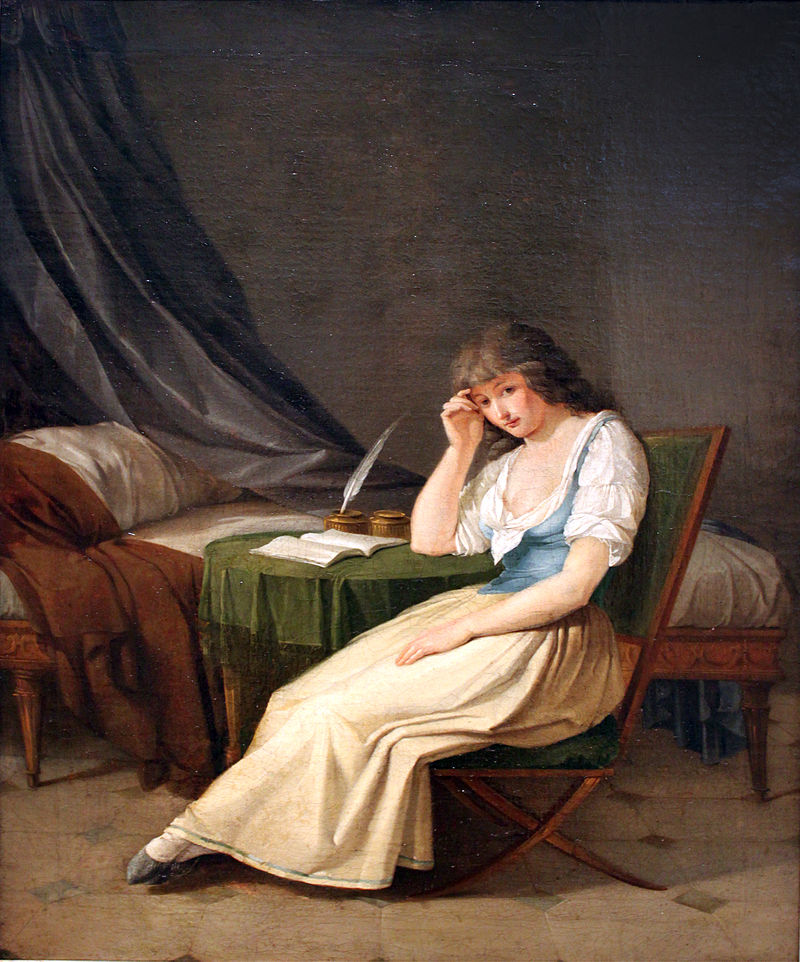
1799 Hetsch Junges Maedchen anagoria.JPGLately I was debating whether or not I should reveal my favourite secret writing tip for my next blog post...well, this isn't it, (I'm still wondering if I should reveal my secret!) but don't fret, until I finally weaken and spill the beans, for now I shall share with you what I believe is one of the best aids of the trade.  Okay, so I've already published it as a book review, but for those of you who may have missed it:

The Oxford Guide to Writing: A Rhetoric and Handbook for College Students by Thomas S. Kane   Hardcover: 848 pages    Publisher: Oxford University Press (February 3, 1983)   ISBN: 9780195032451

(Image: Young girl in morning dress, speculating sitting at a table by Philipp Friedrich von Hetsch, 1758-1839.)


For college students?  This is also for serious writers.

 Many have asked, "How do you learn how to write? Properly, that is?" By this they mean: how does one become a skilled artist of the craft, melding words into classic pieces of prose, fiction, non-fiction, or whatever the specific genre of choice might be. Practise, time, patience are the customary answers, yet the `how' of writing, the basic nuts and bolts are often elusive. Unless you have a firm grasp of the tools available, that is, the art of rhetoric, the development of your own style will flounder. What is rhetoric? It is the ability to write or speak persuasively and effectively, to use language gracefully and with maximum impact. Unfortunately, scuzzy politicians and their empty speeches have maligned the word `rhetoric', but the `Oxford Guide' admirably shows that wonders can be done with the English language with regards to writing when handled by an artist.

This book is an invaluable toolkit for the serious writer who wishes to develop their skills. I stumbled upon it while browsing the library shelves in college and immediately ordered my own copy. Do not be fooled by the title: this is not just for college students! This book continues to serve me well. Yes, it is a big tome, but the chapters and their various sections are beautifully expressed, enjoyable, concise, and most important of all, they are to the point. Sometimes they are quite humorous. Each section ranges from only a few sentences to a paragraph or a page. It is possible to read just a few pages a day with maximum benefit. While there is great attention given to writing essays and the research process for college purposes, the fiction writer will also profit greatly.

At first, the chapters sound horribly dull and technical as you skim through the table of contents, but it is surprising how interesting they are, filled with examples from the publications of famous writers, and other easy to understand diagrams and exercises.

 If you are already an accomplished author, this book is still for you, revision never goes astray. Writing is an ongoing learning process, you may be surprised at how your style may evolve after reading this handbook. You don't have to do the writing exercises if you don't want to, it is amazing the information you absorb, you may be forgiven if you skip them.

 On the other hand, if you are a teacher, this book gives you ample ammunition at the end of each chapter for creative writing assignments.

 To university students, this book is a `must-have', particularly if you are not studying English as a major or minor. Often you will be thrown into the deep end at college and be expected to know how to write essays and term papers on an academic level. Perhaps you may be offered an extra course to help brush up your writing skills for the expected requirements, but be prepared to develop these skills on your own. Let the `Oxford Guide' be your writing mentor.

The amount of information compiled is unbelievable. In addition to a handy reference index in the front of the hard cover for important chapters, there are full indexes in the back, including one for the authors mentioned and the examples taken from their works, not to mention a nifty `Correction Symbols' key inside the back cover explaining all the red ink marks your professor or publishing editor may scrawl over your work during the correction process.

This is an extremely useful book, the only information that is lacking concerns the Internet as a research tool since the `Oxford Guide' was published in the days before the World Wide Web. To conclude, I shall let the Table of Contents speak for itself and recommend that every serious writer whether they be a student, a poet, essayist or novelist, invest in a copy.  It is out of print, but if you take the time to hunt around for a copy, you will be glad that you did.

Introduction
Chapter 1: Truths and Misconceptions about Writing
You Can Learn to Write
Writing is Worth Learning
Good Prose is Recognizable
Correctness Is Not the Essence of Good Writing
Writing Is Different from Talking
Writing Is More Than Simply Finding Words to Fit Ideas
Everybody Has Things to Say

Chapter 2: Basic Considerations: Purpose
Introduction
Subject
Reader
Purpose and Types of Prose

Chapter 3: Basic Considerations: Strategy and Style
Style

Chapter 4: Basic Considerations: Grammar, Usage, and Mechanics
Grammar
Usage
Mechanics
Grammar, Usage, and Style

Part One-The Writing Process
Introduction

Chapter 5: Invention: Gathering
The Commonplace book
The Journal

Chapter 6: Invention: Exploring Ideas
Free Writing
The Analytical Approach
Conclusion

Chapter 7: Outlining
Introduction
The Formal Outline
The Scratch Outline
A Simple Outline
From an Outline Essay

Chapter 8: Drafting and Revising
Drafting
Revising
Final Copy
Conclusion

Part Two-The Essay

Chapter 9: Structure of the Essay: Beginning
Introduction
Announcing the Subject
Limiting the Subject
Indicating the Plan of the Essay
Interesting the Reader
A Word about Titles
Conclusion

Chapter 10: Structure of the Essay: Closing
Summary and Conclusion
Termination
Conclusion

Chapter 11: Structure of the Essay: Organizing the Middle
Signposts
Inter-Paragraph Transitions

Chapter 12: Tight and Loose Organization
Introduction
Tight Organization
Loose Organization

Chapter 13: Point of View, Persona, and Tone in the Essay
Point of View
Persona
Tone

Part Three- The Expository Paragraph
Introduction

Section I - Basic Structure

Chapter 14: The Sentence in the Paragraph

Introduction
The Topic Sentence
Sentences as Analytical Elements

Chapter 15: Paragraph Unity
Introduction
Coherence
Paragraph Flow

Section II- Methods of Development

Chapter 16: Paragraph Development: Illustration

Introduction
Illustration

Chapter 17: Paragraph Development: Restatement
Simple Restatement
Negative-Positive Restatement
Specification

Chapter 18: Paragraph Development: Comparison and Contrast
Focusing a Comparison or Contrast
Organizing a Comparison or Contrast
Developing the Comparison or Contrast
Conclusion

Chapter 19: Paragraph Development: Analogy
Introduction
Analogy as Clarification
Analogy as Persuasion
Conclusion

Chapter 20: Paragraph Development: Cause and Effect
Cause
Effects
Cause and Effects

Chapter 21: Paragraph Development: Definition
Kinds of Definition
Modes of Defining

Chapter 22: Paragraph Development: Analysis or Classification
Analysis of Abstractions
Analysis of a Process

Chapter 23: Paragraph Development: Qualification
Section III- Variations and Complexities

Chapter 24: Variations in the Topic Sentence and in Paragraph Unity
Delaying the Topic Sentence
Implying the Topic Sentence
Figurative Unity

Chapter 25: Paragraph Patterns
Introduction
The Lineal Paragraph
The Ramifying Paragraph
The Circular Paragraph
The Loose Paragraph

Chapter 26: Sentence Patterns in the Paragraph
Introduction
Similarity in sentence Pattern
Variety in Sentence Structure
Conclusion

Part Four - The Sentence
Introduction

Section I- The Grammatical Types of Sentences

Chapter 27: The Simple Sentence

Introduction
The Awkward Simple Sentence
The Effective Simple Sentence

Chapter 28: The Compound Sentence
Awkward Coordination
Overcoordination
Use Parataxis

Chapter 29: The Complex Sentence
Subordinate Ideas of Lesser Importance
Do Not Subordinate Ideas of Primary Importance
Reduce Subordination to the Briefest Form that Clarity Requires
Arrange Subordinate Constructions in Natural Order if Possible
The Compound-Complex Sentence

Chapter 30: The Fragment
The Detached Adverbial Clause
The Detached Participle
The Detached Adjectival Clause
The Verbless Statement

Section II - Sentence Style

Chapter 31: The serial Sentence

Introduction
The Segregating Style
The Freight-Train Sentence
The Cumulative Sentence

Chapter 32: Parallel and Balanced SentencesIntroduction
The Parallel Sentence
The Balanced Sentence
Summary

Chapter 33: Hierarchic Structure
Introduction
The Loose Sentence
The Periodic Sentence
The Convoluted Sentence
The Centered Sentence

Chapter 34: Sentence Patterns: Summary

Chapter 35: Concision in the Sentence
Introduction
Use Single Adverb or Adjective
Avoid Awkward Anticipatory Constructions
Use Colon or Dash
Use Ellipsis
Use Parallelism
Use Participles
Use Predicate Adjectives
Do Not Waste the Subject, Verb and Object

Chapter 36: The Emphatic Sentence
Introduction
Announcement
Balance
The Fragment
The Imperative Sentence
The Interrupted Sentence
The Inverted Sentence
Negative-Positive Restatement
The Periodic Sentence
The Rhetorical Sentence
Rhythm and Rhyme
The Short Sentence

Chapter 37: Emphasis within the Sentence
Adjectives
Ellipsis
Isolation
Mechanical Emphasis
Polysyndeton and Asyndeton
Position
Repetition

Chapter 38: Variety in Sentence
Introduction
Vary Length and Pattern
Fragments
Rhetorical Questions
Varied Openings
Interrupted Movement

Chapter 39: Rhythm in the Sentence
Introduction
Effective Rhythm
Awkward Rhythm
Metrical Runs
Rhythmic Breaks
Mimetic Rhythm
Rhyme
Summary

Part Five- Diction
Introduction

Section I .- The Question of Meaning

Chapter 40: Meaning

Words Are Not Endowed with Fixed `Proper' Meanings
Denotation and Connotation
Levels of Usage
Telic Modes of Meaning
Conclusion

Section II -Problems of Diction

Chapter 41: Wrong Words

Introduction
Too Abstract
Ambiguity
Barbarism
Clarity
Cliché
Colloquialism
Connotation
Denotation
Awkward Figure of Speech
Too General
False Hyperbole
Wrong Idiom
Jargon
Meaning?
Pretentious Diction
Repetitiousness
Awkward Sound

Chapter 42: Unnecessary Words
Introduction
Overlong Connective
Unnecessary Definition
Distinction without Difference
Word Is Too General
Obvious by Implication
Wordy Modification
Wordy Passive
Overqualification
Redundancy
Scaffolding
Undeveloped Ideas
Too Many Verbs

Section III - Figurative and Unusual Diction

Chapter 43: Figurative Language

Introduction
Similes
Metaphor
Personification
Allusions
Irony
Overstatement and Understatement
Puns
Zeugma
Imagery

Chapter 44: Unusual Words and Collocations
Introduction
Unusual Words
Unusual Collocations

Section IV - Improving Your Vocabulary

Chapter 45: Dictionaries and Thesauri

Introduction
General Dictionaries
Special Dictionaries: Thesauri

Part Six- Description and Narration

Chapter 46: Description
Introduction
Objective Description
Subjective Description
Process Description

Chapter 47: Narration
Introduction
Organizing a Narrative
Meaning of a Narrative
Point of View and Tone in a Narrative

Part Seven - Persuasion

Introduction
The Nature of Persuasion
Kinds of Persuasion

Chapter 48: Argument
Introduction
Deductive Argument
Induction
Refutation and Concession
Composing an Argument

Chapter 49: Persuasion: Nonrational Modes
Introduction
Satire
Eloquence
Pathos
Ethos, Style, and the Audience
Emotional Fallacies
Table of Fallacies

Part Eight - The Research Paper and the Discussion Answer

Chapter 50: Gathering, Quoting, and Citing Information
Introduction
Using the Library
Taking Notes
Incorporating Notes into Your Paper
Footnotes
The Bibliography

Chapter 51: A Sample Research Project
Choosing a Topic
Looking for Sources
Organizing Your Notes
Writing the Paper

Chapter 52: Answering Discussion Questions

Part Nine- Punctuation

Introduction
The Purpose of Punctuation
`Rules' of Punctuation
The Two Categories of Punctuation

Chapter 53: Stops

The Period
The Question Mark
The Exclamation Point
The Colon
The Semicolon
The Comma
The Dash

Chapter 54: The Other Marks
The Apostrophe
The Quotation Mark
The Hyphen
Parentheses
Brackets
The Ellipsis
Diacritics
Underlining
Capitalization

Reference Grammar

Reference Grammar Contents
Introduction

Parts of Speech: Verbs, Nouns, Pronouns, Adjectives, Adverbs, Prepositions, Conjunctions, Interjections

The Grammar of the Sentence
Definitions, Subjects, Complements, Objects of Propositions, Adjectivals, Adverbials, Absolutes, Murky Modifiers, Problems in Agreement


***
 
Like my blog? You will LOVE my books!


Wednesday, 2 September 2015

Creativity Inspiring Creativity

(Post originally published April 22, 2015)

descriptionInspiration (1769)
by Jean-Honoré Fragonard (1732-1806)


It is no secret that artists, poets and writers are continually influencing and being influenced by other creative minds and their work. It has happened for millennia, one new movement after another springs forth from the innovative experiments of the previous generations that came before them, consequently receiving recognition as the latest styles of their age.

Just as in real life, characters in novels experience the same ‘aha!’ moments and find themselves inspiring and inspired by others, but then that is hardly surprising: even fictitious stories for the most part burst forth as imaginative flourishes from the soil of real life occurrences and observations, or the narratives wouldn’t have the ‘ring of reality’ about them, (unless the story is really ‘out there’ in the woolly realm of La-La Land!)


Naturally, my characters in Brushstrokes of a Gadfly experience the same pattern of innovation or they wouldn’t be realistic, especially as many of them are supposed to be artists. Of course, the author undergoes the same process with them as the story develops, the characters and what inspires them can also lead to episodes of philosophical soul-searching in return, a cyclical process of creativity ever renewing itself!

One of those ‘philosophical’ moments occurred this morning. First, I was greeted with some very disturbing news on Sky International from Britain. We, the faceless mass of the public, have been told over and over these last few months or so how well Britain is doing and that the UK economy is steadily growing out of the Great Recession, (God forbid we should actually tell the truth and state we are in a global Great Depression!) Yet, the news just reported this morning (April 22, 2015) that the food banks have received an unprecedented number of people searching for aid like never before. So, who is actually ‘doing better’ in the United Kingdom? Certainly not the average British family! Reading between the lines it is easy to see that only the mega-rich are doing better, while the economic climate is still just as dire if not getting worse for the general populace like never before, but the media keeps lying to everyone about that. To cap that off, in the same news segment there was a disturbing report about the rise of cruelty to animals in Britain, and the national Prevention to Cruelty to Animals charity has received a record number of calls and reports; every thing from woeful neglect to outright torture of innocent creatures that can’t defend themselves. One story was appalling, a dog was locked for months on end amidst her own excrement in a car outside her master’s home. Furthermore, she was expecting a litter of puppies and was obviously undernourished. What a demonic, yes demonic, way to treat man’s best friend. Thankfully, she was spotted and rescued and now has a new loving owner. Is there a link between dire poverty and this ghastly display of cruelty? Are people taking their frustration and stress out on the animal kingdom and their once-beloved pets? This is certainly are a disturbing sign of our times.


While hearing this on the TV, or the ‘telly’ as they say in the UK and Ireland, I was multitasking and conducting some practical research for my next novel, a continuation of Brushstrokes of a Gadfly. One artist that barely received a ‘hello, how are you?’ in the first novel is currently receiving some additional development in the second. (UPDATE: the new novel is finished! Vocation of a Gadfly!) The artist in question is inspired by the opening lines of a poem by William Blake (1757-1827) who was also an artist, and since I had only paraphrased Blake’s lines in the draft so far, I thought I had better go over them again to make sure I quoted them correctly. They belong to Auguries of Innocence, however, I couldn’t stop at the opening verses and continued to read the entire poem to refresh my memory. Immediately Blake’s other lines struck me as markedly relevant to the report I was hearing repeated over and over in the background:

“A dog starved at his master’s gate
Predicts the ruin of the state.”


How apropos. Continuing the poem, it was eerie to see just how accurate Blake had pinpointed the omens of decline both morally, financially and politically that now are so evident in our modern nations, and not just in Britain. ‘Auguries’ is another word for ‘omens’ or ‘future signs’ after all. How mankind interacts with other creatures considered less than itself is a tell-tale sign indeed: if you cannot treat defenceless animals with compassion and kindness, how will you treat your fellow human beings? Demonically I say. I shall give an example:


I suppose not many have heard of one frightening story that was recently reported from Greece a few months ago, a country which is beyond doubt like other countries completely mired in a Great Depression rivalling that of the previous century. In the very birthplace of ‘Western Civilisation’ there are families now living for two and three years without electricity as they cannot afford it. One man who was a caregiver for his elderly mother at home could no longer pay the electricity bill, so the company just came and shut the power off, regardless of the fact the elderly woman was on a life support machine. The workers had their orders so they simply turned it off: the man could only stand by and watch as his mother died. Sounds like the Nazis at the extermination camps who claimed innocence when accused of war crimes because they were ‘only following orders’, doesn’t it? The next frightening part of the story was the man couldn’t call the ambulance and have his mother taken to the hospital as the public health system in Greece is only for those who have a job, (which in their crippled economy are non-existent). If this is the current condition of the country that gave us democracy, I fear for the rest of the democratic world. Just look at the crumbling decay of Detroit and the water management debacle: the last time I heard, the poor who could not afford to pay their water bills were cut off from that service, a basic necessity of life. The situation was becoming critical to the point a UN commission went to investigate just like any other third world country experiencing major humanitarian crises. I do not know if the situation there has been resolved or is still in crisis, but what a humiliating downturn for America that prides itself on being one of the most developed nations in the world.

What times we are living in! The poor and the elderly are not the only victims, all those who cannot speak for themselves or are afraid to speak up are also vulnerable. Let us not forget the children. The cases of scandalizing and cruelty to children are woefully on the increase, and have been for the last sixty years. Talk about the loss of innocence. How can we turn our backs and ignore the outright atrocities that are happening in our era? I promise, no more horror stories in this post, but I could not help but jump up on my soapbox ~ a few of my characters are ‘gadflies’ after all, people who cannot help but shake things up and get people to do a little soul-searching too, so I suppose I’m still on topic. Moving on...

Of course, after reviewing Blake’s poem a few more times, I find it has now provided me with several other ideas to develop in the new novel, you shall have to read Vocation of a Gadfly to see what, where, how, and with which characters. However, for now I shall share with you Blake’s famous poem below underneath one of his artworks, which you might be familiar with thanks to the ‘Hannibal Lecter’ movie, Red Dragon (2002) starring Anthony Hopkins.  What philosophical, soul-searching ideas will Blake’s following verses inspire you with?


description 


The Great Red Dragon and the Woman Clothed in the Sun (c. 1803)


Auguries of Innocence (1803)
by William Blake

(First published in 1863.)


To see a world in a grain of sand,
And a heaven in a wild flower,
Hold Infinity in the palm of your hand,
And eternity in an hour.

A robin redbreast in a cage
Puts all heaven in a rage.
A dove-house fill’d with doves and pigeons
Shudders hell thro’ all its regions.
A dog starv’d at his master’s gate
Predicts the ruin of the state.
A horse misused upon the road
Calls to heaven for human blood.
Each outcry of the hunted hare
A fibre from the brain does tear.
A skylark wounded in the wing,
A cherubim does cease to sing.
The game-cock clipt and arm’d for fight
Does the rising sun affright.

Every wolf’s and lion’s howl
Raise from hell a human soul.
The wild deer, wand’ring here and there,
Keeps the human soul from care.
The lamb misus’d breeds public strife,
And yet forgives the butcher’s knife.
The bat that flits at close of eve
Has left the brain that won’t believe.
The owl that calls upon the night
Speaks the unbeliever’s fright.
He who shall hurt the little wren
Shall never be belov’d by men.
He who the ox to wrath has mov’d
Shall never by be woman lov’d.
The wanton boy that kills the fly
Shall feel the spider’s enmity.
He who torments the chafer’s sprite
Weaves a bower of endless night.
The caterpillar on the leaf
Repeats to the thy mother’s grief.
Kill not the moth nor butterfly,
For the last judgment draweth nigh.
He who shall train the horse to war
Shall never pass the polar bar.
The beggar’s dog and widow’s cat,
Feed them and thou will grow fat.
The gnat that sings his summer’s song
Poison gets from slander’s tongue.
The poison of the snake and newt
Is the sweat of envy’s foot.
The poison of the honey bee
Is the artist’s jealousy.

The prince’s robes and beggar’s rags
Are toadstools on the miser’s bags.
A truth that’s told with bad intent
Beats all the lies you can invent.
It is right it should be so;
Man was made for joy and woe;
And when this we rightly know,
Thro’ the world we safely go.
Joy and woe are woven fine,
A clothing for the soul divine.
Under every grief and pine
Runs a joy with silken twine.
The babe is more than swaddling bands;
Throughout all these human lands
Tools were made, and born were hands,
Every farmer understands.
Every tear from every eye
Becomes a babe in eternity;
This is caught by females bright,
And return’d to it’s own delight.
The bleat, the bark, the below, and roar,
Are waves that beat on heaven’s shore.
The babe that weeps the rod beneath
Write revenge in realms of death.
The beggar’s rags, fluttering in air,
Does to rags the heaven’s tear.
The soldier, arm’d with sword and gun,
Palsied strikes the summer’s sun.
The poor man’s farthing is worth more
Than all the gold on Afric’s shore.
One mite wrung from the lab’rer’s hands
Shall buy and sell the miser’s lands;
Or, it protected from on high,
Does that whole nation sell and buy.
He who mock’s the infant’s faith
Shall be mock’d in age and death.
He who shall teach the child to doubt
The rotting grave shall ne’er get out.
He who respects the infant’s faith
Triumphs over hell and death.
The child’s toys and the old man’s reason
Are the fruits of the two seasons.
The questioner, who sits so sly,
Shall never know how to reply.
He who replies to words of doubt
Doth put the light of knowledge out.
The strongest poison ever known
Came from Caesar’s laurel crown.
Nought can deform the human race
Like to armour’s iron brace.
When gold and gems adorn the plow,
To peaceful arts shall envy bow.
A riddle, or the cricket’s cry,
Is to doubt a fit reply.
The emmet’s inch and eagle’s mile
Make lame philosophy to smile
He who doubts from what he sees
Will ne’re believe, do what you please.
If the sun and moon should doubt,
They’d immediately go out.
To be in a passion you good may do,
But no good if a passion is in you.
The whore and gambler, by the state
Licensed, build that nation’s fate.
The harlot’s cry from street to street
Shall weave old England’s winding-sheet.
The winner’s shout, the loser’s curse,
Dance before dead England’s hearse.
Every night and every morn
Some to misery are born,
Every morn and every night
Some are born to sweet delight.
Some are born to sweet delight,
Some are born to endless night.
We are led to believe a lie
When we see not through the eye,
Which was born in a night to perish in a night,
When the soul slept in beams of light.
God appears, and God is light,
To those poor souls who dwell in night;
But does a human form display
To those who dwell in realms of day.


***
 
Like like my blog? You will LOVE my books!


Tuesday, 1 September 2015

Who Do You Write Like?

(Post originally published November 5, 2011)

While searching the Internet one day, I came across a funny little widget that caught my attention:


“Check which famous writer you write like with this statistical analysis tool, which analyzes your word choice and writing style and compares them with those of the famous writers.”


Perhaps this is not such a good idea as writers are supposed to find their own voice, but out of curiosity, naturally, I had to see which illustrious master of the pen it would assign me.

I tried various pieces, first chapters of all my books, paragraphs from my blog posts and received the following results:

H.P. Lovecraft came up the most.

David Foster Wallace, was second.

Then James Joyce, Margaret Atwood, and Douglas Adams

Of course, I am not that gullible, trusting in an Internet widget! I wanted to see what would happen if I deliberately made up a few lines that sounded like those by a well known author. Dr. Seuss was in the widget's list of famous authors, so I plonked in the following made-up lines:


I will not eat them on a mat,
I will not eat them with a hat,
I will not eat them with a cat,
I will not eat them with a rat.


The result? Margaret Atwood!

Aha! As expected, widgets cannot think or really analyze anything, but to give it a fair chance, I inserted real lines from “Green Eggs and Ham”:
“Do you like green
eggs and ham?” “I do not like them,
Sam-I-am.
I do not like green
eggs and ham!”
"Would you like them
here or there?"
"I would not like them
here or there.
I would not like them
anywhere."
“I do so like green
eggs and ham!
Thank you!
Thank you,
Sam-I-am!”


What did I get?


 Ernest Hemingway.  Seriously.


I decided to do one last experiment, and just let a whole line of a's run across in to paragraph, like this:

aaaaaaaaaaaaaaaaaaaaaaaaaaaaaaaaaaaaaaaaaaaaaaaaaa

And, a whole paragraph of e's:

eeeeeeeeeeeeeeeeeeeeeeeeeeeeeeeeeeeeeeeeeeeeeeeeee

And lo and behold ~ I write like J.D. Salinger.

The moral of the story: don't trust an internet widget to understand your unique style of writing.

And, the inventors of the widget want me to sign up for their newsletter to teach me how to write better? That's kinda funny!

Here's the link if you wish to try your own experiments: I Write Like ... 


***
 
Like my blog? You will LOVE my books!