Whatever curious and interesting subject strikes my fancy, be it silly or serious, gets posted for your reading pleasure.
Showing posts with label poetry. Show all posts

Wednesday, 20 February 2019

Only a Fool ....


As I tend to share some quotes from my work, I thought I would
 share this one from my latest novel, Vocation of a Gadfly 


It is a poem called 'Dixit Insipiens'.


Only a fool says in his heart
There is no Creator, no King of kings,
Only mules would dare to bray
These lethal mutterings.
Over darkened minds as these
The Darkness bears full sway,
Fruitless, yet, bearing fruit,
In their fell, destructive way.
Sterile, though proliferate,
A filthy progeny sees the day,
When Evil, Thought and Action mate:
Breeding sin, rebels and decay.
The blackest deeds and foul ideals,
Multiply throughout the earth,
Through deadened, lifeless, braying souls,
The Darkness labours and gives birth.
Taking the Lord’s abundant gifts
And rotting them to the core,
They dress their dish and serve it out
Foul seeds to infect thousands more.
‘The Tree of Life is dead!’ they cry,
‘And that of Knowledge not enough,
Let us glut on the ashen apples
Of Sodom and Gomorrah.’


Have pity on Thy children, Lord,
Left sorrowing on this earth,
While fools and all their kindred
Cast shadows with their murk,
And to the dwindling wise,
They toss their heads and wryly smirk.
The world daily grinds to dust
Virtue’s fair unicorns,
Rather, it would now beget
Vice’s mutant manticores.
Wisdom crushed, our joy is gone,
Buried under anxious fears
For lost rights and freedoms,
We shed many bitter tears.
Death is life, Life is no more,
Humanity buried in a tomb,
In a fatal prenatal world
Where tiny flowers
Are ripped from the womb,
Discarded, thrown away,
Inconvenient lives
That barely bloomed.
Our elders fare no better,
Their wisdom unwanted by and by,
Boarded out to end their days,
And forsaken are left to die.
Only the youthful and the useful,
In this capital age prosper and fly.
Yet, they too are quickly strangled,
Before their future plans are met,
Professions legally pre-enslaved
Held bound by mounting student debt.
Our leaders all harangue for peace
Yet perpetrate the horror,
Of economic greed shored up
Through manufactured war.
Our armies now welter
In foreign civilian gore.
How many of our kin are slain
For hollow martial honour?
As if we could forget, ignore,
The scourge of nuclear power,
Alas, victors are rarely tried
For their woeful crimes of war.
Hope and pray we never see
A repeat of Hiroshima.


No more!
Crimes are legion,
The deeds of devil-spawn!
What has happened to the souls
Your Divine Image was minted on?
They are now recast:
Crooked coins of Caesar and
The Whore of Babylon.
How often mankind shuts its ears
To Your music celestial,
Mankind would rather march
To the anthems of Hell.
If humanity cannot be reclaimed
By Your Mercy and great Love
Deservedly we should be struck
By Vengeance from above.
Many dread the Final Day,
And the Crack of Doom
For others the Apocalypse
Will never come too soon.
‘Lift up your heads, be glad’,
Fools shall bray no more
For at last the Master comes
To thresh His threshing floor.


::::::::


Tuesday, 1 March 2016

O'Leary the Leering Leprechaun


By now, we all have seen,
That little eejit on the shelf,
The naughty, spying git,
The smug Christmas Elf.

We forget he’s sitting there,
He stares all day without a flinch,
Then, when all are fast asleep,
Comes alive to play the Grinch.

He flies to Santa the tattletale
With all the good and bad we’ve done,
Then, plays the downright hypocrite,
He spends the night in mischievous fun.

Well, if you think the Elf is creepy,
Have I got some news for you!
Let me introduce his cousin,
Leering Leprechaun O’Leary.

One bright St. Patrick’s Day
O’Leary came up with something new:
He thought long and hard upon his life,
How things had gone askew.

He and all his merry kin,
Once wee angels in the sky,
But swayed by Lucifer’s horrid sin,
From Heaven were forced to fly.
Not yet so bad to be sent to Hell,
But not good enough to stay On High,
Down to earth they were flung,
Banished from their angelic home
Soaring in the sky.

Now they wander Eire
Waiting for the end,
For when the Trumpets blow,
The Pit will receive them then.
Before their time will come, they figured,
“Why always be so glum?
While we trot about this earth,
We’ll have our share of fun.”

So, for eons they danced and played,
Enjoyed their gold, revelled and fought,
Drank and partied millenniums away,
Heaven? Nary a thought!

Then the light for a moment dawned
In Little O’Leary’s brain.
“Sakes! What’s the point of this,
If we can’t see Heaven again?
Hell is not the place to be,
I can see that clearly.”
So, the wheels began to turn,
In the crafty mind of O’Leary.

He noted his jingly cousin
That little eejit Elf,
Was on to something good,
By sitting, staring on the shelf.
“If me daft cousin can be a snoop
And spy for someone saintly,
Sure, I can do the same,
It might work, just maybe!”

It didn’t take him long at all
To think who he could aid,
Why, St. Patrick could use a hand,
And then, he’d have it made!

That saint had earned a special grace,
A blessed gift from above:
That he could greet the Irish,
The people that he loved.
He would get to judge them first,
Then, send their souls to God.

What?  How could so great a task
Be done by just one saintly man?
O’Leary could help keep track,
Of those Paddies in every land!
Spying on all the Gaels and Celts,
Now that’s a master plan!

He could easy creep them out,
With all his leery looks,
Freaking them into being good,
Or mark them in his books.

So many Paddies make a hames
Of St. Paddy’s special day,
O’Leary thought he’d make sure,
They’d spend it the right way.

A smithereen o’green,
Did ye forget to wear?
Ah, look out me friend,
Cead mille pinches beware!
Did ye go to Holy Mass,
Did ye say all ye’re prayers?
Or like ing-uns are ye’re sins and faults
Piled up in multi-layers?
Did ye go and take the time
To unload them in confession?
Or are ye just wasting time,
With all ye’re larkin’ and ye’re messin’?
Did ye think to thank the saint?
Nay! Ye’re  a gluttin’ on corned beef!
Ah, more’s the pity,
Ah, more’s the grief!
A drinking ye love to do,
The stout and whisky flows,
The Pledge is gone, the bottle remains,
Oh yes, O’Leary knows.

The list goes on and on,
What keeps us from the pearly gates,
O’Leary marks it down,
He and all his tiny mates,
For now every leprechaun,
Has latched to his bright idea,
If they help him out they figure,
They too will have no Hell to fear!

We know not what St. Patrick thinks,
O’Leary lacked the stout to ask him,
The leprechauns thought they’d save them up,
And all the records hand him.

How successful will they be?
‘Tis difficult to tell,
For they are all as cheeky,
As the family Christmas Elves.
At night they resume their auld ways,
It’s hard to stay so good!
Drinking, fighting and hoarding gold,
Divilment is in the blood.

But by day if they are caught,
You may see what they have done,
Poking in all your cupboards,
Or making sure your work’s undone.

Ah, ye little hypocrites,
To spy on us so sorely!
Then to find ye’re just as weak,
Ye’re virtues are sure poorly!

So beware, all ye who boast,
Irish ancestry in ye’re blood,
O’Leary and all his puckish mates
Know when ye’re up to no good.


Other St. Patrick Day Blog posts you may like:


When St. Patrick Impaled a Convert 
***
 
Like my blog? You'll LOVE my books!


Monday, 25 January 2016

A Smidgeon of Babble


Considering this blog was supposed to feature some babble in the mix, it’s about time I added some.

I find it one of those odd facts of life that of all the time we are given, we forget the day to day details of life and discover we tend to remember highlights of everything we have experienced.  For instance, a whole year passes and for the most part we vividly remember only moments of it, many of these tend to be funny events that continue to stick simply because they are so vivid, unless of course you keep a daily journal.  (And nope, I don’t do that.)

Anyway, what got me on this train of thought is a particular poem that just lodged in my noggin’ when I was in third grade.  Of all the things I read and learnt that year, I only had to read it once and I’ve never been able to shake it since, probably because it was so ludicrous, not to mention somewhat ghastly!  Every now and again, that stupid poem just pops back up and I can’t get it out of my head, similar to hearing a catchy jingle for dog food or paint thinner you hear on the radio just once and you end up humming the stupid thing all day despite your best efforts.  This is how it went:


“One bright day in the middle of night,
Two dead boys got up to fight,
Back to back they faced each other,
Drew their swords and shot each other.
A deaf policeman heard the noise,
He came and shot the two dead boys.
If you don’t believe this lie is true,
Ask the blind man, he saw it too.”


After all these years, I’ve  remembered the poem, but not the author!  I recall it was in a children’s book about the history of America’s first artists and literati, which was printed in the 1950s or 60s judging from the style of the watercolour illustrations that would remind one of Cupie dolls.  It was  the hardback, cloth bound kind, its cover was deep red and faded after years of kiddies thumbing through it not to mention the times it lay forgotten, gathering dust on the shelf. 

 Thanks to Google, at least I now realise why I can’t recall the author: “Poem by Unknown” (also popularly known as Anonymous).  I’ve also discovered there are longer variants of the poem.  Were they added later?  Probably.  If you think you can survive more babble, here is one variant:


“One bright morning in the middle of the night,
Two dead boys got up to fight.
Back-to-back they faced one another,
Drew their swords and shot each other.
One was blind and the other couldn't see,
So they chose a dummy for a referee.
A blind man went to see fair play,
A dumb man went to shout "hooray!"
A deaf policeman heard the noise,
And came and killed those two dead boys.
A paralysed donkey walking by,
Kicked the copper in the eye,
Sent him through a rubber wall,
Into a dry ditch and drowned them all.
If you don't believe this lie is true,
Ask the blind man— he saw it too!”


Image result for grumpy catThere are a few other comical things I can remember from that book: there was an artist that used to make his own brushes by pulling out hairs from his cat’s tail.  I can recall the illustration for the poor thing, he looked like an ancestor to that famous Facebook feline, Grumpy Cat, and no wonder!  You would look grumpy too if you had a furry tail and it was plucked bare.  (The illustration showed that too.)   What that cat suffered for the name of art!   All I remember in that chapter in the book is the cat and have forgotten the artist, so back to Google to do some fact-finding ....

*Types in search box ‘American artist who used hair from his cat's tail to make paint brushes’*

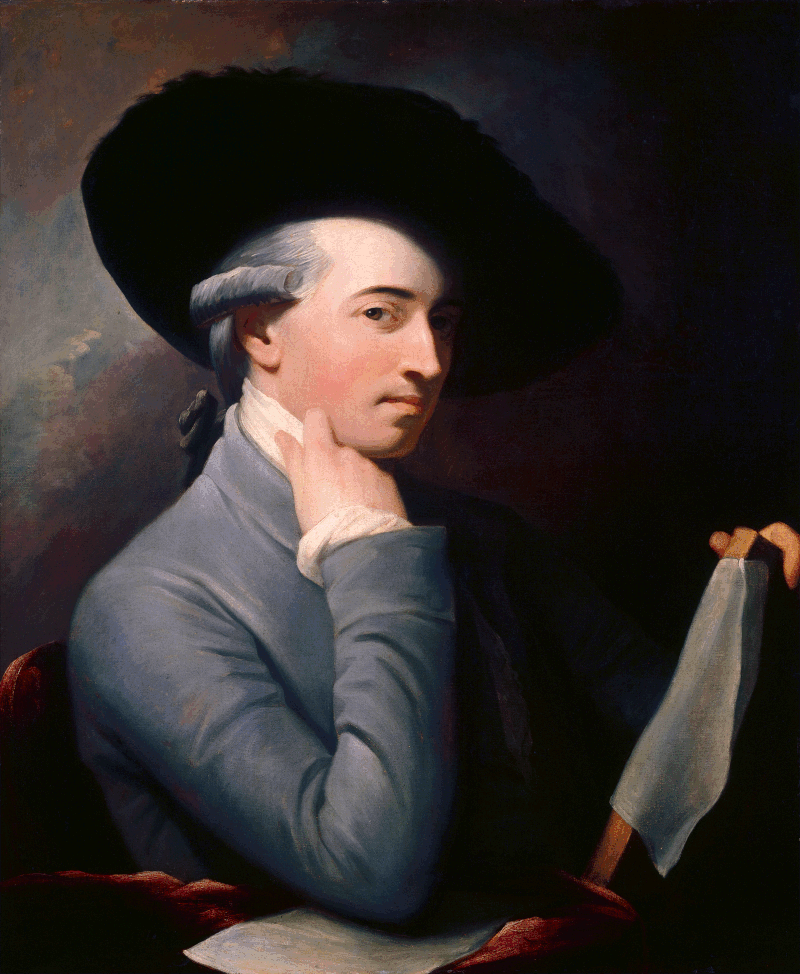
This time I’ve hit the jackpot and have discovered the artist was Benjamin West  (1738-1820), the ‘father of American painters’. (I also found out the cat became a major character in another children's book called "Benjamin West and His Cat Grimalkin" by Marguerite Henry.)  Was that the cat's real name?  I'm not sure, but now, I've found the artist!


BenjaminWestNGA.gif
(Image: Self portrait by Benjamin West, c. 1763)


According to my Google-ing, West was from a Quaker family that believed art was nothing short of indulging in  idolatry, but West was born with a gift that could not be stifled.  As a child, he learnt from the Indians how to make his own natural pigments with clay dug up from a riverbank mixed with bear grease, and thus taught himself how to paint during his early years.   Of course, it now makes sense: if art was frowned upon in his household, no wonder he had to make his brushes any way he could.  It was a good thing he followed his passion: he progressed so much so in his art and self-education that he became  the second president of the Royal Academy in London, serving from 1792 to 1805 and from 1806 to 1820.  He was offered a knighthood but refused it as he deemed himself more worthy of a peerage!


(Image below, another masterpiece by Benjamin sporting a very long title: "Death of a Stag or Alexander III of Scotland Rescued from the Fury of a Stag by the Intrepidity of Colin Fitzgerald, 1786." Not bad for a self-taught artist!)


One other story I remember from that old children's book was an artist who wanted to capture the Mississippi River for posterity,  (the river in those early days was still considered the frontier), but he had a daring project in mind that would surpass any normal painting.  Instead of a ho-hum flat square canvas, he wanted to recreate the experience of floating up and down the river, so drew an exact copy of the riverbank as seen by a boat, painting it on a giant horizontal scroll that could be unrolled in front of an audience and rolled up at the other end as the unveiling progressed. This art form was called the panorama.  Of course, I’ve forgotten the name of this artist too, so nothing for it, time for more Google-ing....

*types in search box ‘artist who painted Mississippi on huge rolling scroll canvas´ *
 
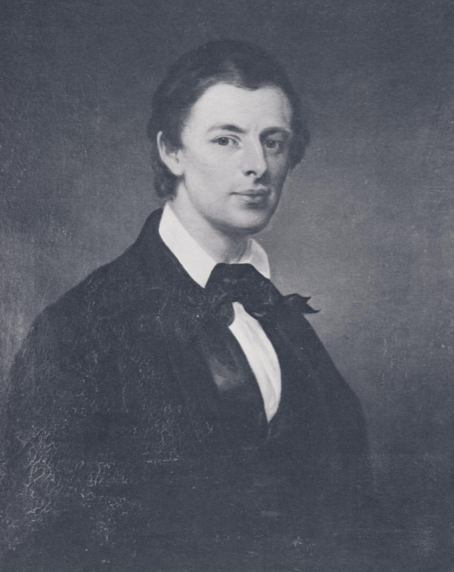
Eureka!   I’ve found him: John Banvard (1815-1891). 


(Image: Portrait of Banvard by Anna Mary Howitt, 1849)

 
There are quite  a few details I’ve just discovered about his work, he completed other panorama scrolls before the Mississippi project, such as scenes of Venice, Jerusalem, and one project that sounds like an imaginary journey to hell entitled, ‘The Infernal Regions’, but his gigantic picture of the Mississippi River became the most famous.  It was about half a mile long, although contemporary accounts tweaked the facts and inflated that measurement to three miles long! 

His show was so successful that it went on world tour and earned him a fortune after which he built an immense mansion on the North Shore of Long Island resembling Windsor Castle.  He named the estate Glenada after his daughter Ada, but his dream home was so extravagant it was nicknamed ‘Banvard's Folly’ by the locals. 

He was perhaps one of the first artists to ever become a millionaire, but then, Banvard eventually lost his fortune and was buried in a pauper’s grave in Watertown, a frontier town in the Dakota Territory.  He was almost completely lost to history, and many of his works were destroyed, a strange reversal of fortune for someone who become so famous. How did that happen?  The unravelling began when he tried to compete against P.T. Barnum’s Museum featuring strange extravaganzas showcasing the historical, the weird, the mysterious, which were sometimes outright half-credible hoax exhibits. Barnum would later become the creator of that famous entertainment intuition under the Big Top, yes, the three ring circus, the ‘Greatest Show on Earth’.

You can read more about John Banvard’s tale of rags to riches and back to rags again here in "The Atlas Excerpt: Banvard's Folly."

It’s interesting the odd stuff you can find when researching a bit of babble.


(Image below: Banvard showing his masterpiece to Queen Victorian and Prince Albert in 1849)


Monday, 21 September 2015

'La Dame de Fer' ~ An Eiffel Tower Poem


(Image: Gravure présentant une vue générale de l'Exposition. 1889)


'La Dame de Fer'


When Hitler marched
across the Rhine
To take the land of France,
La dame de fer decided,
‘Let’s make the tyrant dance.’
Let him take the land and city,
The hills and every flower,
One thing he will never have,
The elegant Eiffel Tower.
The French cut the cables,
The elevators stood still,
‘If he wants to reach the top,
Let him walk it, if he will.’
The invaders hung a swastika
The largest ever seen.
But a fresh breeze blew
And away it flew,
Never more to be seen.
They hung up a second mark,
Smaller than the first,
But a patriot climbed
With a thought in mind:
‘Never your duty shirk.’
Up the iron lady
He stealthily made his way,
Hanging the bright tricolour,
He heroically saved the day.
Then, for some strange reason,
A mystery to this day,
Hitler never climbed the tower,
On the ground he had to stay.
At last he ordered she be razed
Down to a twisted pile.
A futile attack, for still she stands
Beaming her metallic smile.


Brushstrokes of a Gadfly***

If you liked the poem, you may love the novel it's from.

Get your copy today! 


Brushstrokes of a Gadfly ~ a biting novel of love and art.


Wednesday, 2 September 2015

Creativity Inspiring Creativity

(Post originally published April 22, 2015)

descriptionInspiration (1769)
by Jean-Honoré Fragonard (1732-1806)


It is no secret that artists, poets and writers are continually influencing and being influenced by other creative minds and their work. It has happened for millennia, one new movement after another springs forth from the innovative experiments of the previous generations that came before them, consequently receiving recognition as the latest styles of their age.

Just as in real life, characters in novels experience the same ‘aha!’ moments and find themselves inspiring and inspired by others, but then that is hardly surprising: even fictitious stories for the most part burst forth as imaginative flourishes from the soil of real life occurrences and observations, or the narratives wouldn’t have the ‘ring of reality’ about them, (unless the story is really ‘out there’ in the woolly realm of La-La Land!)


Naturally, my characters in Brushstrokes of a Gadfly experience the same pattern of innovation or they wouldn’t be realistic, especially as many of them are supposed to be artists. Of course, the author undergoes the same process with them as the story develops, the characters and what inspires them can also lead to episodes of philosophical soul-searching in return, a cyclical process of creativity ever renewing itself!

One of those ‘philosophical’ moments occurred this morning. First, I was greeted with some very disturbing news on Sky International from Britain. We, the faceless mass of the public, have been told over and over these last few months or so how well Britain is doing and that the UK economy is steadily growing out of the Great Recession, (God forbid we should actually tell the truth and state we are in a global Great Depression!) Yet, the news just reported this morning (April 22, 2015) that the food banks have received an unprecedented number of people searching for aid like never before. So, who is actually ‘doing better’ in the United Kingdom? Certainly not the average British family! Reading between the lines it is easy to see that only the mega-rich are doing better, while the economic climate is still just as dire if not getting worse for the general populace like never before, but the media keeps lying to everyone about that. To cap that off, in the same news segment there was a disturbing report about the rise of cruelty to animals in Britain, and the national Prevention to Cruelty to Animals charity has received a record number of calls and reports; every thing from woeful neglect to outright torture of innocent creatures that can’t defend themselves. One story was appalling, a dog was locked for months on end amidst her own excrement in a car outside her master’s home. Furthermore, she was expecting a litter of puppies and was obviously undernourished. What a demonic, yes demonic, way to treat man’s best friend. Thankfully, she was spotted and rescued and now has a new loving owner. Is there a link between dire poverty and this ghastly display of cruelty? Are people taking their frustration and stress out on the animal kingdom and their once-beloved pets? This is certainly are a disturbing sign of our times.


While hearing this on the TV, or the ‘telly’ as they say in the UK and Ireland, I was multitasking and conducting some practical research for my next novel, a continuation of Brushstrokes of a Gadfly. One artist that barely received a ‘hello, how are you?’ in the first novel is currently receiving some additional development in the second. (UPDATE: the new novel is finished! Vocation of a Gadfly!) The artist in question is inspired by the opening lines of a poem by William Blake (1757-1827) who was also an artist, and since I had only paraphrased Blake’s lines in the draft so far, I thought I had better go over them again to make sure I quoted them correctly. They belong to Auguries of Innocence, however, I couldn’t stop at the opening verses and continued to read the entire poem to refresh my memory. Immediately Blake’s other lines struck me as markedly relevant to the report I was hearing repeated over and over in the background:

“A dog starved at his master’s gate
Predicts the ruin of the state.”


How apropos. Continuing the poem, it was eerie to see just how accurate Blake had pinpointed the omens of decline both morally, financially and politically that now are so evident in our modern nations, and not just in Britain. ‘Auguries’ is another word for ‘omens’ or ‘future signs’ after all. How mankind interacts with other creatures considered less than itself is a tell-tale sign indeed: if you cannot treat defenceless animals with compassion and kindness, how will you treat your fellow human beings? Demonically I say. I shall give an example:


I suppose not many have heard of one frightening story that was recently reported from Greece a few months ago, a country which is beyond doubt like other countries completely mired in a Great Depression rivalling that of the previous century. In the very birthplace of ‘Western Civilisation’ there are families now living for two and three years without electricity as they cannot afford it. One man who was a caregiver for his elderly mother at home could no longer pay the electricity bill, so the company just came and shut the power off, regardless of the fact the elderly woman was on a life support machine. The workers had their orders so they simply turned it off: the man could only stand by and watch as his mother died. Sounds like the Nazis at the extermination camps who claimed innocence when accused of war crimes because they were ‘only following orders’, doesn’t it? The next frightening part of the story was the man couldn’t call the ambulance and have his mother taken to the hospital as the public health system in Greece is only for those who have a job, (which in their crippled economy are non-existent). If this is the current condition of the country that gave us democracy, I fear for the rest of the democratic world. Just look at the crumbling decay of Detroit and the water management debacle: the last time I heard, the poor who could not afford to pay their water bills were cut off from that service, a basic necessity of life. The situation was becoming critical to the point a UN commission went to investigate just like any other third world country experiencing major humanitarian crises. I do not know if the situation there has been resolved or is still in crisis, but what a humiliating downturn for America that prides itself on being one of the most developed nations in the world.

What times we are living in! The poor and the elderly are not the only victims, all those who cannot speak for themselves or are afraid to speak up are also vulnerable. Let us not forget the children. The cases of scandalizing and cruelty to children are woefully on the increase, and have been for the last sixty years. Talk about the loss of innocence. How can we turn our backs and ignore the outright atrocities that are happening in our era? I promise, no more horror stories in this post, but I could not help but jump up on my soapbox ~ a few of my characters are ‘gadflies’ after all, people who cannot help but shake things up and get people to do a little soul-searching too, so I suppose I’m still on topic. Moving on...

Of course, after reviewing Blake’s poem a few more times, I find it has now provided me with several other ideas to develop in the new novel, you shall have to read Vocation of a Gadfly to see what, where, how, and with which characters. However, for now I shall share with you Blake’s famous poem below underneath one of his artworks, which you might be familiar with thanks to the ‘Hannibal Lecter’ movie, Red Dragon (2002) starring Anthony Hopkins.  What philosophical, soul-searching ideas will Blake’s following verses inspire you with?


description 


The Great Red Dragon and the Woman Clothed in the Sun (c. 1803)


Auguries of Innocence (1803)
by William Blake

(First published in 1863.)


To see a world in a grain of sand,
And a heaven in a wild flower,
Hold Infinity in the palm of your hand,
And eternity in an hour.

A robin redbreast in a cage
Puts all heaven in a rage.
A dove-house fill’d with doves and pigeons
Shudders hell thro’ all its regions.
A dog starv’d at his master’s gate
Predicts the ruin of the state.
A horse misused upon the road
Calls to heaven for human blood.
Each outcry of the hunted hare
A fibre from the brain does tear.
A skylark wounded in the wing,
A cherubim does cease to sing.
The game-cock clipt and arm’d for fight
Does the rising sun affright.

Every wolf’s and lion’s howl
Raise from hell a human soul.
The wild deer, wand’ring here and there,
Keeps the human soul from care.
The lamb misus’d breeds public strife,
And yet forgives the butcher’s knife.
The bat that flits at close of eve
Has left the brain that won’t believe.
The owl that calls upon the night
Speaks the unbeliever’s fright.
He who shall hurt the little wren
Shall never be belov’d by men.
He who the ox to wrath has mov’d
Shall never by be woman lov’d.
The wanton boy that kills the fly
Shall feel the spider’s enmity.
He who torments the chafer’s sprite
Weaves a bower of endless night.
The caterpillar on the leaf
Repeats to the thy mother’s grief.
Kill not the moth nor butterfly,
For the last judgment draweth nigh.
He who shall train the horse to war
Shall never pass the polar bar.
The beggar’s dog and widow’s cat,
Feed them and thou will grow fat.
The gnat that sings his summer’s song
Poison gets from slander’s tongue.
The poison of the snake and newt
Is the sweat of envy’s foot.
The poison of the honey bee
Is the artist’s jealousy.

The prince’s robes and beggar’s rags
Are toadstools on the miser’s bags.
A truth that’s told with bad intent
Beats all the lies you can invent.
It is right it should be so;
Man was made for joy and woe;
And when this we rightly know,
Thro’ the world we safely go.
Joy and woe are woven fine,
A clothing for the soul divine.
Under every grief and pine
Runs a joy with silken twine.
The babe is more than swaddling bands;
Throughout all these human lands
Tools were made, and born were hands,
Every farmer understands.
Every tear from every eye
Becomes a babe in eternity;
This is caught by females bright,
And return’d to it’s own delight.
The bleat, the bark, the below, and roar,
Are waves that beat on heaven’s shore.
The babe that weeps the rod beneath
Write revenge in realms of death.
The beggar’s rags, fluttering in air,
Does to rags the heaven’s tear.
The soldier, arm’d with sword and gun,
Palsied strikes the summer’s sun.
The poor man’s farthing is worth more
Than all the gold on Afric’s shore.
One mite wrung from the lab’rer’s hands
Shall buy and sell the miser’s lands;
Or, it protected from on high,
Does that whole nation sell and buy.
He who mock’s the infant’s faith
Shall be mock’d in age and death.
He who shall teach the child to doubt
The rotting grave shall ne’er get out.
He who respects the infant’s faith
Triumphs over hell and death.
The child’s toys and the old man’s reason
Are the fruits of the two seasons.
The questioner, who sits so sly,
Shall never know how to reply.
He who replies to words of doubt
Doth put the light of knowledge out.
The strongest poison ever known
Came from Caesar’s laurel crown.
Nought can deform the human race
Like to armour’s iron brace.
When gold and gems adorn the plow,
To peaceful arts shall envy bow.
A riddle, or the cricket’s cry,
Is to doubt a fit reply.
The emmet’s inch and eagle’s mile
Make lame philosophy to smile
He who doubts from what he sees
Will ne’re believe, do what you please.
If the sun and moon should doubt,
They’d immediately go out.
To be in a passion you good may do,
But no good if a passion is in you.
The whore and gambler, by the state
Licensed, build that nation’s fate.
The harlot’s cry from street to street
Shall weave old England’s winding-sheet.
The winner’s shout, the loser’s curse,
Dance before dead England’s hearse.
Every night and every morn
Some to misery are born,
Every morn and every night
Some are born to sweet delight.
Some are born to sweet delight,
Some are born to endless night.
We are led to believe a lie
When we see not through the eye,
Which was born in a night to perish in a night,
When the soul slept in beams of light.
God appears, and God is light,
To those poor souls who dwell in night;
But does a human form display
To those who dwell in realms of day.


***
 
Like like my blog? You will LOVE my books!


An Eye-Opening Prayer by a Fifteen Year Old

(Post originally published February 25, 2012)

description

Despite what my blog is called, I'm not offering “blarney” today.

This poetic prayer was allegedly composed by a fifteen year old student who wished to remain anonymous, which is a shame as they certainly deserve credit for this poignant critique of how the once-honoured values of our country have been overturned for one nation under a licentious police state with liberty and justice for some as displayed in the school system these days. If the children of the nation are our future, God help us!


"Now I sit me down in school
Where praying is against the rule,
For this great nation under God
Finds mention of Him very odd.
If Scripture now the class recites,
It violates the Bill of Rights,
And any time my head I bow,
Becomes a Federal matter now.
Our hair can be purple, orange or green,
That's no offence; it's a freedom scene.
The law is specific, the law is precise,
Prayers spoken aloud are a serious vice.
For praying in a public hall
Might offend someone with no faith at all.
In silence alone we must meditate,
God's name is prohibited by State.
We're allowed to cuss and dress like freaks,
And pierce our noses, tongues and cheeks.
They've outlawed guns, but first the Bible,
To quote the Good Book makes me liable.
We can elect a pregnant Senior Queen,
And the unwed daddy our Senior King.
It's 'inappropriate' to teach right from wrong,
We're taught that such 'judgements' do not belong.
We can get our condoms and birth control,
Study witchcraft, vampires and totem poles,
But the Ten Commandments are not allowed,
No Word of God must reach this crowd.
It's scary here I must confess,
When chaos reigns, the school's a mess.
So, Lord, this silent plea I make,
Should I be shot, my soul please take!
     Amen."


***
 
Like my blog? You will LOVE my books!


Poor but Blessed ~ An Irish Memory (Author Unknown)

(Post originally published February 8, 2012)

description


We met and we married a long time ago,
We worked for long hours when wages were low,
No TV, no wireless, no bath, times were hard.
Just a cold water tap and a walk in the yard.
No holidays abroad, no carpets on floors.
We had coal on the fire and we didn't lock doors;
Our children arrived, no Pill in those days;
And we brought them up without any state aid.
They were safe going out and played in the park,
And old folk could go for a walk in the dark.
No Valium, no drugs and no LSD.
We cured most of our ills with a good cup of tea.
No vandals, no muggings, there was nothing to rob;
We felt we were rich with a couple of bob.
People were happier in those far off days,
Kinder and caring in so many ways.
Milkmen and paperboy would whistle and sing.
A night at the pictures was our one mad fling.
We all get our share of troubles and strife.
We just have to face it ~ that's the pattern of life.
Now, I'm alone, I look back through the years.
I don't think of the bad times, the troubles and tears.
I remember the blessings: our home and our love,
And that we shared them together, I thank God above.


***
 
Like my blog?  You will LOVE my books!