Whatever curious and interesting subject strikes my fancy, be it silly or serious, gets posted for your reading pleasure.
Showing posts with label angels. Show all posts

Friday, 29 September 2017

The Feast Day of an Angelic Champion

September 29 is the feast day held in honour St. Michael, the Confessor of God's Infinite Divinity, and the Champion of Heaven and the Church.

I cannot let this time pass without another blog post in his honour, and he has never failed to answer one of my prayers!


As Tradition states, he received his name right after the creation of the angels when Lucifer rebelled against the Creator and declared himself to be like unto God. While the rebellious seraph-turned-devil was busy stirring up rebels for his cause, an Archangel came forward from the lower choirs, he was not even a seraph like Lucifer, or a blazing cherub. “Who is like unto God?” became his battle cry as he mustered the loyal angels. Together they drove out Lucifer renamed Satan and all the other evil rebels from Heaven.


As a reward, God raised up Michael - “Who is Like unto God”- and made him Prince over all the Angels, and as we know from Scripture and Tradition he is one of the Seven that stand before the Throne of the Almighty.


Tradition also holds that one of St. Michael's duties is to lead the souls of the recently departed to their Particular Judgement before God, and he has also been given the task of weighing every good and evil deed in the Eternal Scales to see if that soul is fit for Heaven or Hell. He himself confirmed this to the approved mystic Marie-Julie Jahenny (1850-1941) in addition to revelations about his other roles in Heaven: he also conducts the Angelic choirs and the angelic symphonies, so in fact, he is the Angel of Music when you think about it. He also revealed some other interesting details, Heaven has books and Rosaries!

You can find out more about that interesting apparition, click here: Conversation with St. Michael, Prince of the Angels

In another revelation to Marie-Julie Jahenny, he declared that after God, the power granted to him is very great, and that if we knew the extent of this power, we would not be slack in offering our prayers to him and asking for protection. (Hint hint!) No wonder! The demons never sleep, and we need all the protection we can get.

He also revealed to Marie-Julie other fantastic revelations about the future of France and the Church, which will affect the whole world: he will be there to protect the Great Catholic Monarch when he arrives to restore the absolute monarchy, and with his flaming sword will root out everything the Freemasons had tried to accomplish in their efforts to destroy both Church and monarchies, also warning of the chastisements that will take place before then as a warning. You can find more here: Revelations of St. Michael to Marie-Julie Jahenny.


There are some interesting theories about St. Michael being the Angel of Peace of Fatima, Portugal. After living in Portugal for many years now, I've discovered by talking to the locals that St. Michael was always traditionally venerated as the Guardian Angel of the country. One story I've heard is the miraculous apparition of the “red sword and wing” in the sky during the medieval period as the Christian soldiers were driving the Muslims out of the country, which led to the founding of “St. Michael's Order of the Wing” by the King of the time.


I've tried looking up details online, but nothing is appearing in English on this, however, since this comes from the mouth of monarchists whom I've met who belong to this chivalric Order, I'm going to assume it's true, eventhough I can't seem to find any dates connected with this apparition of the great red angelic wing and sword in the sky. This may have happened when the knights helped to retake the town of Santarém from the Moors on May 8, 1147. From a source I found it says a feast of St. Michael fell on this day, but sadly, no mention of any apparition! However, you will find St. Michael represented in many churches holding a shield with the emblem of Portugal, and of interest, the Red Wing is featured on the emblems of the revived order currently under the leadership of Dom Duarte, Duke of Braganza, pretender to the throne of Portugal.


Left: Cross of the Order of St. Michael of the Wing.

Right: Grand Cross of the Order


Notice the red wing in the emblems.


I cannot help but note this story of the Order's founding also has an interesting connection to the later visions of Fatima. Sr. Lucia says that in one of the visions she saw the Holy Father leading people to a great rugged cross through a destroyed city and a field of war with soldiers shooting and killing many in the procession. Overhead an angel appeared holding out his flaming sword ready to strike the earth, the flames of which were stopped by Our Lady's splendour, he then cried out “Penance! Penance! Penance!”, obviously a warning before the world is struck with great chastisements and wars, which seems very close to the warnings St. Michael gives to Marie-Julie Jahenny, who was shown his flaming sword:


“I see that the battle will begin between Saint Michael and Hell, between good and evil.... Mary Immaculate watches over us, what have we to fear?” (Ecstasy date September 29, 1877).


There is an interesting story that has circulated stating that on the day the Angel of Peace gave the three children of Fatima Holy Communion, a consecrated Host and chalice went missing in a church while a festa was happening, (either the church was dedicated to St. Michael, or, the festa at the church that day was held in his honour, perhaps both! Forgive me for being fuzzy on the details). However, the chalice was later returned, but the Host was still missing. Some see this as confirmation St. Michael indeed is the Angel of Peace of Fatima.


(Site of the Apparition of the Angel of Peace where
 he brought the children Holy Communion in Aljustrel, Fatima, Portugal.)


Of course, there is another fascinating modern-day apparition of St. Michael, which allegedly happened during the Korean War, the story of which was spread after a letter written by a young Marine named Michael (of all things) to his mother in 1950 caught the attention of a Navy Chaplain, Fr. Walter Muddy, who tracked down the marine and verified the details of the letter, including the battle fought, etc. The chaplain then publicly read the letter aloud in 1951 before a crowd of 5,000 Marines at the Navla base in San Diego, California. Since then the letter has been published and spread like wildfire ever since:


Dear Mom,

I wouldn't dare write this letter to anyone but you because no one else would believe it. Maybe even you will find it hard but I have got to tell somebody.

First off, I am in a hospital. Now don't worry, ya hear me, don't worry. I was wounded but I am okay you understand. Okay. The doctor says that I will be up and around in a month. But that is not what I want to tell you.

Remember when I joined the Marines last year; remember when I left, how you told me to say a prayer to St. Michael every day. You really didn't have to tell me that. Ever since I can remember you always told me to pray to St. Michael the Archangel. You even named me after him. Well I always have.

When I got to Korea, I prayed even harder. Remember the prayer that you taught me?

"Michael, Michael of the morning fresh crop of Heaven adorning," you know the rest of it.

(Note: it is believed this is the prayer said by the Marine):

Michael, Michael of the morning,
Fresh chord of Heaven adorning,
Keep me safe today,
And in time of temptation
Drive the devil away. Amen.


“Well I said it everyday. Sometimes when I was marching or sometimes resting. But always before I went to sleep. I even got some of the other fellas to say it.

Well, one day I was with an advance detail way up over the front lines. We were scouting for the Commies. I was plodding along in the bitter cold, my breath was like cigar smoke.

I thought I knew every guy in the patrol, when along side of me comes another Marine I never met before. He was bigger than any other Marine I'd ever seen. He must have been 6' 4" and built in proportion. It gave me a feeling of security to have such a body near.

Anyway, there we were trudging along. The rest of the patrol spread out. Just to start a conversation I said, "Cold ain't it." And then I laughed. Here I was with a good chance of getting killed any minute and I am talking about the weather.

My companion seemed to understand. I heard him laugh softly. I looked at him,

"I have never seen you before, I thought I knew every man in the outfit."

"I just joined at the last minute", he replied. "The name is Michael." 
 
"Is that so," I said surprised. "That is my name too."


"I know," he said and then went on, "Michael, Michael of the morning . . ."


I was too amazed to say anything for a minute. How did he know my name, and a prayer that you had taught me? Then I smiled to myself, every guy in the outfit knew about me. Hadn't I taught the prayer to anybody who would listen. Why now and then, they even referred to me as St. Michael.


Neither of us spoke for a time and then he broke the silence. "We are going to have some trouble up ahead."


He must have been in fine physical shape or he was breathing so lightly I couldn't see his breath. Mine poured out in great clouds. There was no smile on his face now. Trouble ahead, I thought to myself, well with the Commies all around us, that is no great revelation.


Snow began to fall in great thick globs. In a brief moment the whole countryside was blotted out. And I was marching in a white fog of wet sticky particles. My companion disappeared.


"Michael, " I shouted in sudden alarm.


I felt his hand on my arm, his voice was rich and strong, "This will stop shortly."


His prophecy proved to be correct. In a few minutes the snow stopped as abruptly as it had begun. The sun was a hard shining disc. I looked back for the rest of the patrol, there was no one in sight. We lost them in that heavy fall of snow. I looked ahead as we came over a little rise.


Mom, my heart stopped. There were seven of them. Seven Commies in their padded pants and jackets and their funny hats. Only there wasn't anything funny about them now. Seven rifles were aimed at us.

"Down Michael, " I screamed and hit the frozen earth.


I heard those rifles fire almost as one. I heard the bullets. There was Michael still standing. 
 
Mom, those guys couldn't have missed, not at that range. I expected to see him literally blown to bits.


But there he stood, making no effort to fire himself. He was paralyzed with fear. It happens sometimes, Mom, even to the bravest. He was like a bird fascinated by a snake.


At least, that was what I thought then. I jumped up to pull him down and that was when I got mine. I felt a sudden flame in my chest. I often wondered what it felt like to be hit, now I know.

I remember feeling strong arms about me, arms that laid me ever so gently on a pillow of snow. I opened my eyes, for one last look. I was dying. Maybe I was even dead, I remember thinking well, this is not so bad.


Maybe I was looking into the sun. Maybe I was in shock. But it seemed I saw Michael standing erect again only this time his face was shining with a terrible splendor.


As I say, maybe it was the sun in my eyes, but he seemed to change as I watched him. He grew bigger, his arms stretched out wide, maybe it was the snow falling again, but there was a brightness around him like the wings of an Angel. In his hand was a sword. A sword that flashed with a million lights.


Well, that is the last thing I remember until the rest of the fellas came up and found me. I do not know how much time had passed. Now and then I had but a moment's rest from the pain and fever. I remember telling them of the enemy just ahead.


"Where is Michael," I asked.


I saw them look at one another. "Where's who?" asked one. "Michael, Michael that big Marine I was walking with just before the snow squall hit us."


"Kid," said the sergeant, "You weren't walking with anyone. I had my eyes on you the whole time. You were getting too far out. I was just going to call you in when you disappeared in the snow."


He looked at me, curiously. "How did you do it kid?"

"How'd I do what?" I asked half angry despite my wound. "This marine named Michael and I were just . . ."

"Son, " said the sergeant kindly, "I picked this outfit myself and there just ain't another Michael in it. You are the only Mike in it."

He paused for a minute, "Just how did you do it kid? We heard shots. There hasn't been a shot fired from your rifle. And there isn't a bit of lead in them seven bodies over the hill there."

I didn't say anything, what could I say. I could only look open-mouthed with amazement. It was then the sergeant spoke again, "Kid," he said gently, "everyone of those seven Commies was killed by a sword stroke."

That is all I can tell you Mom. As I say, it may have been the sun in my eyes, it may have been the cold or the pain. But that is what happened.

Love, Michael”


Look how this young man was rewarded for honouring his name-saint each day and praying for protection!


Again, as St. Michael said to Marie-Julie Jahenny September 29, 1877: "After God, I am your protector and your support. Have recourse to me. If you knew my power, you would be more eager to address your prayers to me each day."


Of course, I could not end this blog without including one of my favourite poems written in his honour by G.K. Chesterton and fist published in 1929. It is a brilliant tribute to Heaven's Champion, the opining lines of which are reminiscent of the prayer that saved the young Marine:


Michael of the Morning,
Michael of the Army of the Lord,
Stiffen thou the hand upon the still sword, Michael,
Folded and shut upon the sheathed sword, Michael,
Under the fullness of the white robes falling,
Gird us with the secret of the sword.

When the world cracked because of a sneer in Heaven,
Leaving out for all time a scar upon the sky,
Thou didst rise up against the Horror in the highest,
Dragging down the highest that looked down on the Most High:
Rending from the seventh heaven the hell of exaltation
Down the seven heavens till the dark seas burn:
Thou that in thunder threwest down the Dragon
Knowest in what silence the Serpent can return.


Down through the universe the vast night falling
(Michael, Michael: Michael of the Morning!)
Far down the universe the deep calms calling
(Michael, Michael: Michael of the Sword!)
Bid us not forget in the baths of all forgetfulness,
In the sigh long drawn from the frenzy and the fretfulness
In the huge holy sempiternal silence
In the beginning was the Word.


When from the deeps of dying God astounded
Angels and devils who do all but die
Seeing Him fallen where thou couldst not follow,
Seeing Him mounted where thou couldst not fly,
Hand on the hilt, thou hast halted all thy legions
Waiting the Tetelestai and the acclaim,
Swords that salute Him dead and everlasting
God beyond God and greater than His Name.


Round us and over us the cold thoughts creeping
(Michael, Michael: Michael of the battle-cry!)
Round us and under us the thronged world sleeping
(Michael, Michael: Michael of the Charge!)
Guard us the Word; the trysting and the trusting
Edge upon the honour and the blade unrusting
Fine as the hair and tauter than the harpstring
Ready as when it rang upon the targe.


He that giveth peace unto us; not as the world giveth:
He that giveth law unto us; not as the scribes:
Shall he be softened for the softening of the cities
Patient in usury; delicate in bribes?
They that come to quiet us, saying the sword is broken,
Break man with famine, fetter them with gold,
Sell them as sheep; and He shall know the selling
For He was more than murdered. He was sold.


Michael, Michael: Michael of the Mustering,
Michael of the marching on the mountains of the Lord,
Marshal the world and purge of rot and riot
Rule through the world till all the world be quiet:
Only establish when the world is broken
What is unbroken is the Word.


Tuesday, 17 January 2017

Writer's 'Anti-Gel' and some Supernatural Assistance

A writer often is often asked: “What do you do when you are struck with Writer's Block?”

You know, that dreaded experience of trying to get the next project off the ground, but find yourself staring at the screen or notepad for hours because the words, story ideas or subject matter are nowhere in sight. Finding any inspiring idea just seems like trying to hunt and trap an extinct mythical creature that can no longer be caught and tamed. Frustrating!


That's your hard core definition of Writer's Block, not having something to write about.  However, believe it or not, in my experinece that's somewhat rare.  A 'block' also has its common variety of niggling frustrations that are more common.


How about the kind where you have your story or academic subject matter ready to put to page, depending on where your creativity is leading you, everything is all laid out in your notes or plot sketches, you have all the information you could ever want, but you still can't seem to start the thing? The first paragraph, not to mention the first page or three, is crucial because you know that's your opportunity to catch your reader's attention. You hope you nail it … but.....you could botch the whole thing and turn your reader off forever.


This expectation of making a good first impression can weigh a writer down, literately block them from starting because nothing sounds and feels right when you type or write it out, and then the anxiety sets in that convinces you're a hopeless mess-up, which makes it worse. Nothing seems to 'gel' together, so I will metaphorically call his icky place the dark paralysing world of “Writer's Anti-Gel”.


When starting the first chapter, of “Faust: My Soul Be Damned for the World, Vol.1”, guess who literally sat for two days a good half of the third staring at a blank screen coaxing the creative muse to appear with loads of coffee and chocolate until FINALLY the first introductory paragraphs 'gelled' into place. (And no, I wasn't goofing on the Internet, I wasn't connected at the time. I was off it several years in fact!)

Writers will tell you just hammer something out and then edit the crud out of it later: you won't get anywhere unless you force yourself to write and get a first draft together, because if you wait for inspiration, it'll take half a lifetime before you get a book together.


Yes, there is truth to that, I do hammer things out be it good or bad once I get into the actual draft and there's something to build on and then edit, but the first paragraphs, (and okay, I'll admit, a good portion of my texts), I like to make sure it sounds perfect in my head and I'll keep editing it as I write instead of just writing away without polishing as I go, so of course, I get stuck in the parallel non-creative gloopy gloopity glop slow-paced dimension that is “Writer's Anti-Gel” until it finally gels in the right direction.


The thing is, the last paragraphs and closing segments are just as tricky in their own way as the first. “Faust” is a historical academic epic so to speak, so naturally the end of the chapter has its own unique requirements. I needed a satisfying conclusion that gels in a way so it's not rambling but not abrupt either, something that makes a lasting impression regarding the vast amount of information just presented and that rounds the whole thing off just nicely in a page, preferably less, maybe with a memorable kick.


Well, when I was nearing the end of that first chapter I got stuck in the non-gelling “anti-gel” universe again. When you're writing about how a real historical individual may have sold his soul to the devil for knowledge, power and worldly glory, and you want to round off this gruesome history 'quite nicely' with a 'memorable kick', that's a tall order!

Of course, I knew I was going to be staring at the screen for days on end with this doozie, but rather than succumbing to staring and wasting time moaning in the Realm of Anti-Gel, or hammering out just anything until it was squished and prodded into place and still feeling like a product that was way below par even for a draft, I did what any desperate writer does ….


I prayed. 


Yes, seriously.

No, I'm not kidding.

I thought of my Guardian Angel, who often gets ignored even though I know he's there.


We never think of our invisible guardians enough or ask their assistance, even with our daily tasks. They don't just guard us from temptation and danger, they like us to involve them in our lives. They take a keen interest in everything we do and they like helping us in our work, (as long as it's not sinful of course!)


  So, I reached out to my neglected princely friend and told him what was needed to finish my first chapter and asked if he could enlighten me with an idea, maybe let me know how to polish it off ....


Then...'It' happened.


No sooner was the request made when the words started to interiorly flow so quickly like a bubbling
cascade it was like I was taking speed dictation. I was literally yelling in my head 'Not so fast! Not so fast!', my fingers tapping away trying to capture that miraculous flow as the text rolled out right to the very end...then, stopped.

This was so different from the 'running flash' of inspiration to where you don't want to stop writing because you're on a roll. I've had that too quite a few times, but when those 'running flashes' happen, it still feel like it's you and your ideas. This wasn't exactly like that. It was really was as if “someone else” was interiorly dropping the words and I was doing my best to keep up with their pace. Prayer answered!

So a word to the struggling writer: try giving prayer a chance, and while you're at it, don't forget you have an angel at your side.


Here it is, the final paragraph to the first chapter of “Faust: My Soul be Damned for the World Volume I”, which I cannot take credit for. I give it fully to my Guardian Angel:


“Faustus, who embraced evil and shunned righteousness, became the foremost symbol of the misuse of free will, that sublime gift from God with its inherent opportunity to choose virtue and reject iniquity. “What shall a man gain if he has the whole world and lose his soul,” (Matt. 16: v. 26) - but for a notorious name, the ethereal shadow of a career, and a brief life of fleeting pleasure with no true peace? This was the blackest and most captivating tragedy of all, few could have remained indifferent to the growing intrigue of this individual who apparently shook hands with the devil and freely chose to descend to the molten, sulphuric chasm of Hell for all eternity for so little in exchange. It is a drama that continues to fascinate today as powerfully as when Faustus first disseminated his infamous card in the Heidelberg locale to the scandal of his generation. In fine, a life of good or evil, the hope of Heaven or the despair of Hell, Faustus stands as a reminder that the choice between these two absolutes also falls to us.” 


::::::::::::::

If you find yourself stuck in a situation, no matter what it is -- don't forget to pray.

:::::::::::::

TABLE  OF CONTENTS -  See other posts on "Books, Babble and Blarney"

Saturday, 21 November 2015

The Mother of All Thanksgivings ~1492 AD?


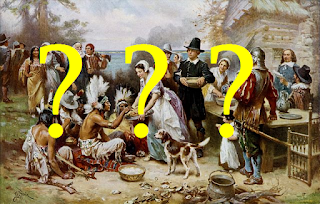
When did the first Thanksgiving Day take place?  Were the Pilgrims who landed at Plymouth Rock and survived that brutal winter with the help of the local natives the first to celebrate our nation’s beloved day of gratitude to God in 1621 as we have been taught?
  
The answer is ‘nope’.

 (Image: The First Thanksgiving by Jean Leon Gerome Ferris, c. 1914)

 For a number of several years now there have been various attempts to correct a popular misconception about American history on who the originators of the first thanksgiving are.  History shows it was not the Pilgrims, but the first intrepid explorers who made it through a perilous voyage to the New World. 

You may have already heard about some of these ‘First Thanksgiving Contenders’ put forward for consideration by eminent historians:


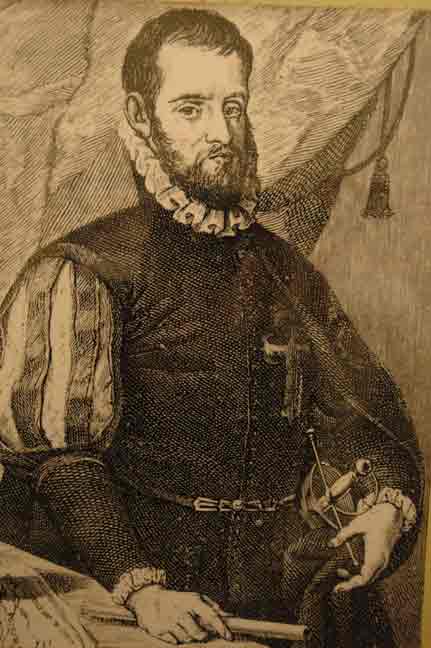
Don Pedro Menéndez  de Avilés: A Spanish explorer who landed on shore in Florida, September 8, 1565.  He named the new land “St. Augustine” in honour of St. Augustine on whose feast day the land was first sighted, August 28.  The native Timucua tribe welcomed the explorers peacefully.  The day the explorers came ashore, the Spanish thanked God with a Mass of Thanksgiving, the very first Catholic Mass to be said on what would become North American land, and afterwards enjoyed a feast with the natives. (For more information, read Prof. Michael Gannons work, The Cross in the Sand).


However, research shows that wasn’t the first Thanksgiving.


The French Huguenot (Protestant) explorer René de Goulaine de Laudonnière landed in Florida a year before Menendez de Aviles.  The Timucua tribe that would later celebrate with Menendez had welcomed them, causing René to order a feast of Thanksgiving be celebrated to God on June 30, 1564.


 Still, that may not be the first Thanksgiving either!

As the Jacksonville Historical Society Website points out:
 
“Can we conclusively determine that Laudonniere’s 1564 feast is the mother of all American Thanksgivings? Probably not. It must be noted that many prior European explorers offered prayers of thanksgiving upon their safe arrivals in Florida, including Juan Ponce de León in 1513 and 1521, Pánfilo de Narváez in 1528, Hernando de Soto in 1529, Father Luis Cáncer de Barbastro in 1549, and Tristán de Luna in 1559. Also, assuredly, each of these explorers came into contact with native peoples and, most likely, would have had to rely not only on their kindness and goodwill, but also their food.” ( Click here to read their article, "America's Real Thanksgiving".)


True, all these explorers are contenders as having originated the First Thanksgiving, Ponce de Leon’s expedition dated 1513 seems to be the earliest candidate, but I shall now suggest another nominee that apparently has been completely overlooked as far as I can tell: I give you.....drum roll please .....


 CristobalColon.jpg


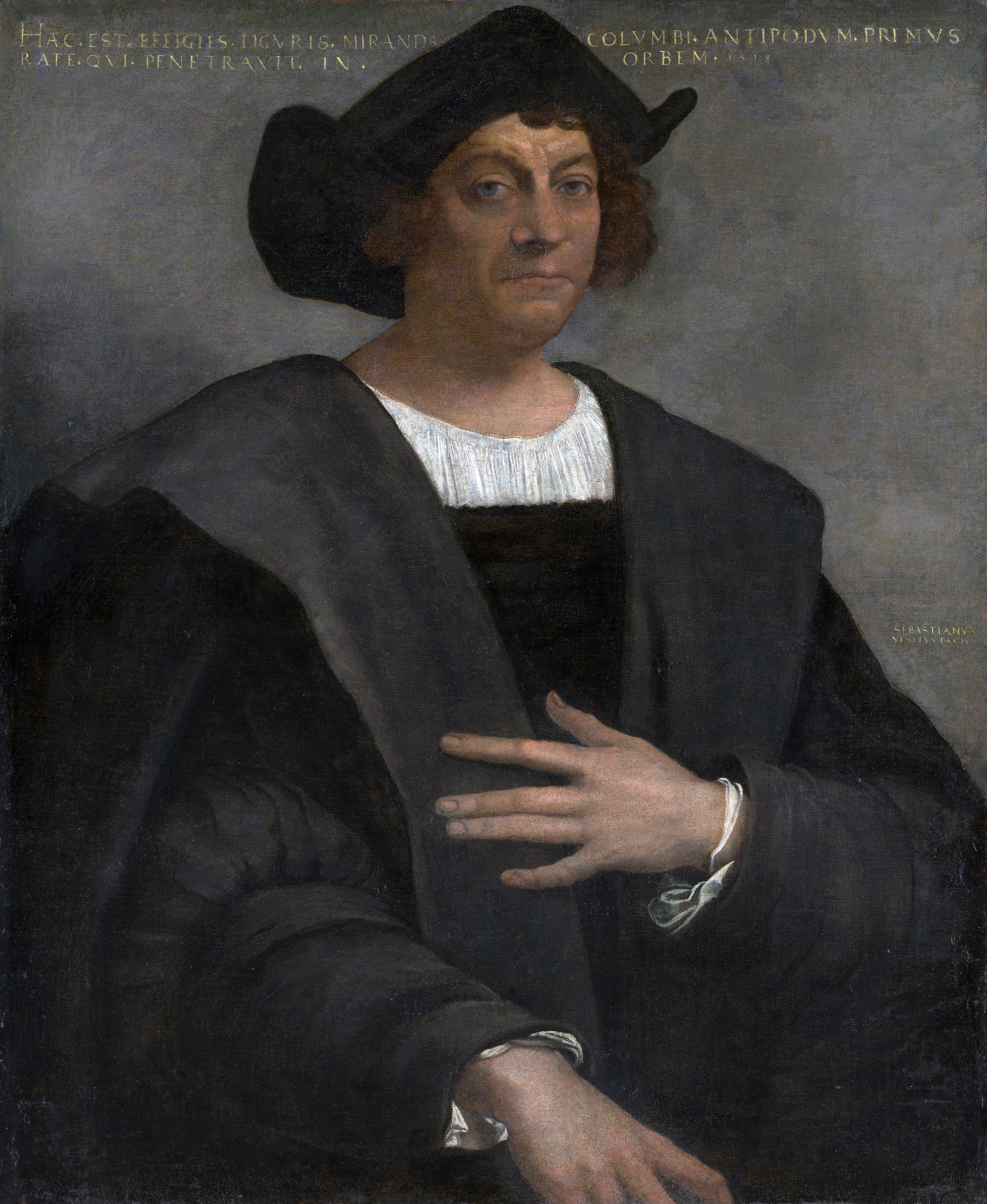
Christopher Columbus.   (Image: posthumous portrait of Columbus by Sebastiano Piombo c. 1520)


What!?  Yes, you read that.  Christopher Columbus.  During his second voyage in 1493, he set foot on what would become a United States territory, Puerto Rico, which was ceded to the US in 1893 by the Spanish government after the Spanish-America War.

‘But how can he have originated that first thanksgiving?’ you are probably thinking.  We have no record of a feast day of gratitude celebrated by him on what is now North American soil.  True, but I pose another question—does the first American Thanksgiving have to be celebrated directly on American soil to be considered the first Thanksgiving in the New World?

Since Christopher Columbus is the first of the European explorers to discover what would one day be called the Americas, (even though he didn’t know it then), his voyage across the sea was the mother of all exploratory voyages to the West.  Therefore he is the ‘primordial founding father’ of our American nation in a manner of speaking. In a that sense he is the ‘first American’ of us all.  Of importance, he gave thanks, and had every reason to.

I won’t go into long details about his early biography and bore you to death, (you can Google that yourselves!) but I cannot help but mention his dogged determination in seeking patrons to fund his daring expedition to achieve what was once thought impossible.

Contrary to popular misconception, the learned scholars of Columbus’ time had figured out that the world wasn’t flat like a Spanish tortilla, they understood that technically it was possible to sail to the rich lands of the Far East by taking a western route, the problem was no one knew exactly how large the earth was, (or that there were another couple of hitherto unknown continents in the way! Surprise, surprise!)   Could an expedition be stocked well enough and last the lengthy voyage in that vast territory of hundreds of thousands of leagues of ocean yet uncharted?  In the end the general consensus was that such a voyage may be possible but unfeasible on a practical level.


 Martellus-Yale.jpg

(Image: The Yale world map by "Henricus Martellus Germanus" (Heinrich Hammer), probably from Florence 1490-92.  This is a map of the known world before Columbus' historic voyage: Europe and Africa to the left, the Far East on the right.  By then, scholars knew the earth was round, but had no idea how large the 'Ocean Sea', our Atlantic ocean was, and if a westward crossing to Asia was possible.) 


However, Columbus not only believed it was possible, but he was fully determined to be prove it could be done.  Making extensive studies of historical and geographic texts, both ancient and modern, he made his own calculations on how long a journey to China and India might take, and that is where he encountered many of his difficulties.  His league estimations for such a journey were deemed way too short of the theoretical mark proposed by the scholars of his time, and therefore no one wanted to risk their capital funding an already hazardous and uncertain expedition led by someone who seemed not to have the foggiest notion of what they were planning to undertake.  This may be a crude comparison, but it is not that different from the latest idea concocted up by idealistic space exploration enthusiasts ~ vis to send a handful of determined citizens volunteers selected by an open application process on a one-way, no-turning-back, lifetime ticket to set up a permanent colony on Mars. In other words, The Mars One Project.  True, theoretically it could be done, and if it could be pulled off, it would be a groundbreaking feat for the annuals of history and science, but it also appears quite insane where practical purposes are concerned!


View of Astronauts and Mars One Colony   

(Image: conceptual art of the Mars-One colony project.  Photo credit, Bryan Versteeg.


 Well, Columbus was attempting something along the same lines.  He did not give up on this dream to sail west and  spent years attempting to secure a patron.  He first went to King John II of Portugal in 1485, but was refused not only on account of his miscalculations, but also because the King’s explorers were busy attempting the Cape of Good Hope route to Asia around the southern tip of Africa and would not be enticed by the dubious half-baked promise of a ‘West Passage’.

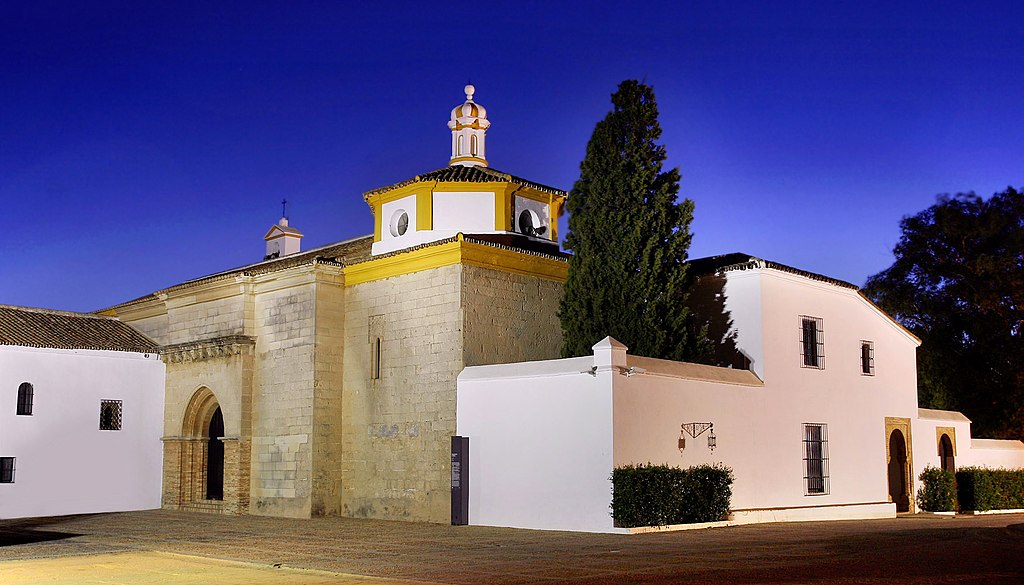
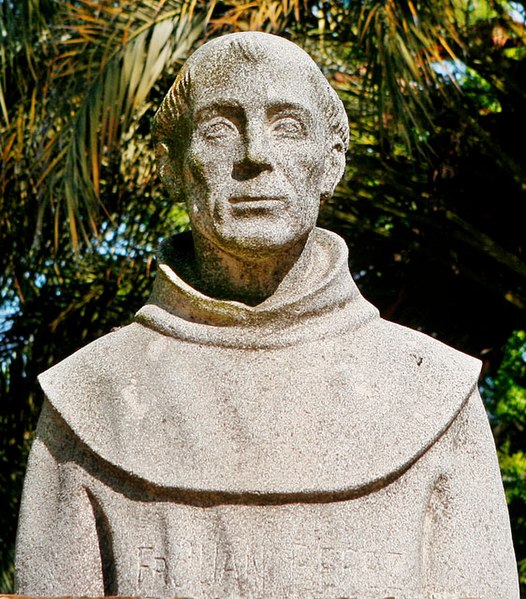
Our persistent would-be explorer next went to Spain where he was fortunate to find influential noble supporters, but his most important followers would prove to be the Franciscan friars at the monastery La Rabida near Palos, especially Brother Juan Pérez, former official of Queen Isabella.  Columbus was eventually introduced to the Spanish court in 1486 and a special commission was set up to investigate his proposals, however, the commission took much time deliberating and investigating his calculations.  At least he had the Spanish court interested: for a time they were intrigued with his idea, and to prevent him from going to another patron, he was awarded a meagre annual allowance to tide him over.  Good boy, stay put.  Here’s some pocket money for you.

Yet, rather than sit around as the special committee in Spain dallied, Columbus went to the Portuguese court again with his daring project in 1488, but was turned down.  He didn’t give up and travelled to Venice and Genoa, but was refused there too and received no encouragement whatsoever.  He even sent his brother Bartholomew Columbus to King Henry VII in England to see if that monarch might be interested in a Western Route to the Indies, that too proved a failure.

Columbus again tried the Court of Spain, and while the committee continued to waste time blowing hot air and weigh in against his voyage, the crown ordered in 1489 that Columbus be given free food and lodgings in any city or town under their domain.

Okay, it was another foot in the door, an indication Spain was not yet out of the picture, even if he was being treated like a ward of the state with no proper job to do!  In fact, he wasn’t treated very well, he could barely make ends meet with the allowance he had been granted, following the Spanish court everywhere as a person with no fixed abode, accepting the order of free lodgings granted by the charity of the court.  No doubt he took this shabby treatment all in the spirit of a good son of St. Francis of Assisi ~ he was a member of the Third Order after all.  In fact, Columbus often appeared before the court dressed in his humble brown robe of the Franciscan order to the point he was mocked for his ragged appearance, and indeed, his sanity was further questioned on account of it!


 (Image: The Franciscan Monastery of Rabida. Photo by Miguel Ángel 2007.)


However, he didn’t give up and entered several more years of lobbying and negotiations with the Spanish court despite the negative outlook.  When he still wasn’t getting anywhere, he decided to try the French court and set out on foot for France in 1491, stopping by the Franciscan La Rabida monastery where he once again shared his plans with Brother Juan Pérez, before continuing to France.  France too turned down his proposals, and we can only imagine the frustration he was feeling by then!   


In 1492, Columbus appealed to the Spanish court while it was residing in Cordoba and was rejected—again.  If we were with him, by now after all these years we might just advise the poor blighter to give up, he did his best, right?  We might tell him to have a nice pity-party for himself, then get on with his life!  In fact, he was at the breaking point.  Leaving the city on a mule, he was on the brink of despair when lo and behold, he was immediately sent for: the queen had miraculously changed her mind!  Some accounts say King Ferdinand had intervened in Queen Isabella’s decision to reject Columbus’ proposal and she agreed to fund the expedition, (the king took credit for the idea, naturally), while in other records the credit of changing the Queen’s decision belongs to Brother Juan Pérez of the Franciscan La Rabida monastery, her former adviser.  Apparently, after listening to Columbus’ plans before his journey to France, the good brother decided to make a special appeal to the royal court on Columbus behalf, and was heard.

At last!  Success!  Gracias a Dios!  Thanks be to God!

The dream of finding a direct westward route to the Indies was now within his grasp!  When the expedition was finally ready to set sail, Columbus chose a very specific date to depart, August 3rd.  Why?  Because before he set sail he wanted he and his men to celebrate on August 2nd and give thanks for this great event with those who never gave up on him despite all the obstacles, the Friars and people of Palos. (Info: Juan Manzano y Manzan, Cristóbal Colón).


File:FrayJuanPerez.jpg
 (Image: bust of Brother Juan Pérez, photo by Miguel Ángel, 2007)

 
First of all, August the 2nd was and continues to be a very important feast day for the Franciscans, the feast of Our Lady of the Angels, and Columbus was a Third Order Franciscan.  It is the anniversary of the dedication of the birthplace of the Franciscan Order and the day of a special Indulgence, the Portiuncula Indulgence.  (Click here to read more.)   That day in 1492 was certainly an important day of feasting to the brothers and local residents of Palos, especially as Our Lady of the Angels was declared their special Patroness against the perils of the sea fifty years earlier by Pope Eugenius IV.  We can only imagine the thanksgiving jubilation on the day before Columbus departed after all the tribulations he went through, and that he wished to celebrate with them.  Anyone familiar with Spain could easily guess there would have been a Mass, and a procession with the famous Marian statue of the monastery, the "Virgen de los Milagros" the Virgin of Miracles.  There would of course have been feasting.  There’s nothing like a fiesta!  Columbus then withdrew and spent the entire night in prayer, apparently before the statue of Our Lady of Miracles, preparing for his momentous journey across an ocean never before charted.


 (Left: The Portiuncula, Italy.  Chapel dedicated to Our Lady of the Angels rebuilt by St. Francis, the birthplace of the Franciscan Order.  Right: The statue of Our Lady of Miracles at the Rabida Monastery in Spain.  Below: Chapel of La Rabida Monastery, Photo by Marc Ryckaert, 2007)


So, that celebratory day held on August 2, 1492 in Rabida / Palos, the Feast of Our Lady of the Angels, may have been the Mother of All Thanksgivings. It may not have been held on American land, but is nonetheless our first American Thanksgiving ~ if it were not for Columbus’ determination, his venture may never have taken place, and someone else may have been granted the honour of becoming the first 'founding father' of modern America.


Of course, for those who insist that for the ‘First Thanksgiving’ to be recognised as such it should at least have taken place somewhere in the New World, we would have to turn our attention to the day Columbus first set foot on San Salvador in 1492.  After weeks of sailing with no sight of land, the men were getting afraid to the point our explorer was facing the prospects of a brutal mutiny.  He finally promised that if they did not sight land by the feast day of Our Lady of Pillar, October 12th, he would turn the ships around, and sure enough, on that very day he reached dry land.  In thanksgiving, he knelt and said the following prayer:


“O Lord, eternal and omnipotent God, Thou hast, by Thy holy word, created the heavens, the earth, and the sea; blessed and glorified be Thy name; praised be Thy majesty, who hast deigned that, by means of Thy unworthy servant, Thy sacred name should be acknowledged and made known in this new quarter of the world.”    (Info: Irving, Washington. A history of the life and voyages of Christopher Columbus. Paris: A. and W. Galignani, 1828. p. 237.)


(Image: Columbus, kneeling, claims the island of San Salvador for Spain.)


The Credo, and the Te Deum praising and thanking God were also said in addition to other multiple prayers of thanksgiving.  That counts as a thanksgiving celebration, doesn’t it?  Of interest, the first sighting of he New World on the feast of Our Lady of Pillar is also apropos in conjunction with Columbus’ dream and his unrelenting perseverance to achieve it despite all the obstacles.

Circa 40 AD, the Apostle St. James the Greater had embarked on a mission to spread the Gospel to the pagans in what is now recognised as Spain,  however, despite all his efforts, he had barely made a few converts and was disheartened by the meagre results.  In what is now Zaragoza, Our Lady appeared to him on top of pillar surrounded by Angels with the baby Jesus in Her arms.  She encouraged James, telling him that the people of Spain would convert and that their faith would be as strong as the pillar on which she was standing.  She gave him the pillar in addition to a wooden statue of her image and  requested that a chapel be built on the spot.  Of interest, theologians note that judging from biblical texts and holy Tradition handed down, the Mother of God was still alive on earth when this visitaion took place, so, it was not an apparition, but a miraculous bi-location event.


 Virgen del Pilar.JPG


(Image: Our Lady of the Pillar, Zaragoza, Spain.  The wooden statue sits on the famous jasper pillar draped in a special mantel donated by devotees.  The pillar is further covered by a bronze case, also covered by a silver case, seen below the mantel.  Our Lady of Pillar has been designated the Patroness of the Hispanic World as her feast day coincides with the discovery of the New World.  Photo by Archivaldo, 2007)
  

Like St. James whose missionary efforts met with disheartening results in the beginning, Columbus faced similar trials.  In addition to his dream of discovering a new western passage, records also indicate he was inflamed with missionary zeal and the desire to spread the Gospel to the pagan lands of the Far East.   How fitting considering his first name ‘Christopher’ means ‘Christ-Bearer’!  Of course, we cannot help but notice a connection between the first thanksgiving feast day of Our Lady of the Angels in Palos and that of Our Lady of Pilar surrounded by Angels.  Just after Columbus had been granted funding for his expedition after years of rejections and ridicule, picture him coming to the brink of the ultimate failure in the venture as his men grew afraid and threatened to mutiny, then, to find victory was again right before him on the horizon at the last minute!  Prayer and perseverance wins all.  We can imagine how heartfelt his Thanksgiving was that day of Our Lady of Pilar when San Salvador was sighted.

In all, if we consider Columbus as having celebrated the two Mother of All Thanksgivings, the Mother of all Mothers was at the heart of them both!

Of course, a time-honoured tradition of looking back on the Pilgrims of future New England as having been the originators of the holiday will not be effaced so easily, especially as it might chagrin a number of people to think that the early thanksgivings of America were predominately  Catholic!  However, as long as we remember what the holiday is all about, thanking God for the blessings He sends and the graces He has given to help us weather our storms in life, whatever they may be, then we have the right spirit of the holiday, no matter what event we believe is the first of them.  We all receive many graces amongst the tribulations of this world, and God expects us to come and  thank Him.  Remember the Gospel of the ten lepers, when only one returned to thank Him for His mercy.  Our Lord said: “Were not ten made clean? And where are the nine? There is no one found to return and give glory to God, but this stranger.” (Luke 17: 17-18)


Thank the Lord for everything, for without Him we have nothing.


Happy Thanksgiving everyone!


***
 
Like my blog? You will LOVE my books!


Sunday, 27 September 2015

Conversation with St. Michael, Prince of the Angels

As we approach the Feast of St. Michael, (September 29) I would like to share one beautiful apparition of the great Archangel to the Church approved mystic and stigmatic, Marie-Julie Jahenny, also known as the 'Breton Stigmatist'.  St. Michael often appeared to her, warning the faithful through her of the terrible punishments about to befall the earth due to sin, but in one remarkable and touching conversation the Archangel revealed some of his duties as Prince of the Angels, also confirming some of his roles that had generally been accepted in tradition.

Below is an excerpt of a long personal tête-à-tête of the Archangel Michael with Marie-Julie dated September 29, 1880.  Excerpt taken from the free E-book  We Are Warned: The Prophecies of Marie-Julie Jahenny      (You can also download a copy from Goodreads  Here.)


(Image: The Great Saint Michael by Raphael)

 
For more concise information about Marie-Julie Jahenny and her revelations, see also:

 ~*~*~*~      ~*~*~*~      ~*~*~*~