In a previous blog post, Do You Know You Have a Superpower? I nagged everyone about the importance of taking the time to
write a good book review if you liked a book as reviews help an author
immensely, however, I left you all
hanging with the promise of how to write something quite different ~ the ‘Good’
Bad Book Review.
So, now I’m keeping my promise and won’t
leave you hanging any longer.
To recap, good reviews are important, and
we authors really appreciate them, but then, what if you the reader didn’t like
a book?

First off, I’ll remind everyone that
pumping out a lot of bad reviews is not a good thing to do.
If you write a lot of bad reviews, your public profile on whatever site you like to post your reviews will end up looking awful and cast YOU in a bad light...you will come across as a sourpuss troll who doesn’t like anything and will find fault with everything. It’s one of the reasons why I don’t like to post anything below a three star review, and very few three-star reviews at that.
If you write a lot of bad reviews, your public profile on whatever site you like to post your reviews will end up looking awful and cast YOU in a bad light...you will come across as a sourpuss troll who doesn’t like anything and will find fault with everything. It’s one of the reasons why I don’t like to post anything below a three star review, and very few three-star reviews at that.
As I said before, you can kill a book
faster by your silence than by writing a bad review.
So if you want to spare someone else from
wasting their hard earned cash on what you think is a bad book, just don’t say
anything about it. Bad reviews can
backfire and actually make people curious about why the book is sooooo bad, and
they end up buying the thing anyway, which is what you trying to save them from
in the first place.
Okay, from that angle a few bad reviews
might help an author too, but frankly, if you can’t say something nice, write
something helpful along with your grumblings ~ go for a three star thing.
This is how you can save yourself from
looking like a meanie sourpuss online, help people discover if it is still a book
they want, and help an author discover their weaknesses, while yet helping to
promote their book without destroying their work entirely. Notice the keyword? HELP.
Yes, it still helps!
Yes, it still helps!
Just give it three stars, (don’t go under
that amount) and write a ‘middling review’, or to look at it in a more positive
light ~ a ‘helpful’ bad book review. In
that way, it ends up being a good review despite whatever flaws you saw in it,
and doesn’t burn the book entirely.

How do you do that?
1) Describe the book, plus
what you didn’t like, (no plot spoilers please), then...
2)
DO include things that still
may reading it worthwhile, even if it wasn’t quite what you were looking for. Find some of the silver lining and include it in your review.
I’ll give an example of a ‘Middling’ 3 star
review I wrote.
Way back in college, I had to read a few of
books on Medieval and Early Modern history during an introduction course on
Medieval music, just to get a feel for the period. One book on the list which we the students
were encouraged to read was what was described on the back cover as a “lively”
and accessible, and is ‘used as an introduction’ to the period: “Europe in the Fourteenth and Fifteenth Centuries” by Denys Hay.
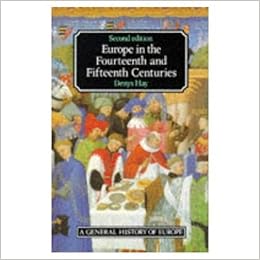 Hmm, I didn’t find it that ‘lively’, and ‘accessible’
to a beginner studying the period like the blurb portrayed it, so how could it be such a ‘great
introduction’ to new students as the back cover promised?
In fact, it felt like it was geared towards those who were already very
familiar with the era.
Hmm, I didn’t find it that ‘lively’, and ‘accessible’
to a beginner studying the period like the blurb portrayed it, so how could it be such a ‘great
introduction’ to new students as the back cover promised?
In fact, it felt like it was geared towards those who were already very
familiar with the era.Basically, it felt like bad advertising, like when you order a product online and the product is not like how it is portrayed in the photos. Same with fast food advertising! The food never looks like its picture.
BUT we love the taste of fast food anyway, and the 'fast' part they have advertised correctly, even if we fill picture-jipped, right? MIDDLE POSITION.
I felt the same about the book, great stuff, but not as portrayed, i.e. as something 'lively and accessible for a beginner', it was a trifle boring to wade through, not 'lively', despite all the really good info, which I did like.
Well, here is my ‘middling’ review on it,
pointing out where it fell flat to me, but ALSO pointing out what other stuff it had that was good, so you get the idea:
***
“As the title
suggests, it is a general overview of the late medieval period of Europe, and according to the back cover, has become the
standard introduction to that era in universities and colleges. My sympathies
to all future history 101 students who are assigned this book in their reading
lists. Yes, it is packed with information, but it is dished out in such a
general form that after wading through the text from cover to cover, you feel
no wiser than before, even for a general introduction, it simply fails to
engage the reader ala Froissart. Perhaps the author tried to fit too much data
into a little space, and the chapters are rather short. However, it is useful
for searching out informative quotations and factoids for term papers and other
research projects. It is more helpful if used simply as an encyclopaedic
reference book, for instance, looking up different sections on conditions of
trade, religious practises and the church councils, conditions of travel, the
arts and culture, the ravages and outcomes of battles, the various successions
to the royal thrones of Europe, etc, rather than expect it to be an
attention-grabbing read. Several interesting general genealogical tables are
included in the appendix, i.e. for the English Royal family, the rulers of
Portugal, Castile, Aragon and Navarre, Poland Hungary and Bohemia, the rulers
of Naples and Milan, the Medicis, the Scandinavian kingdoms, the German and
Holy Roman Emperors, and also the Palaeologi and Ottoman rulers from this
period. There are also several maps displaying the political layout of Europe in those times, and an index. I would recommend it
as a reference book to thumb through when needed, but that is all.”
***
Now, you see what I didn’t like about the
book, BUT, you should also see that I pointed out what else the book contained
and might prove helpful to someone for whatever research they need to do. In fact, there is a lot of information in the
book. In that sense, my middle-of-the-road
grumblings become a ‘helpful’ review.
In fact, as I write this, that review on
Amazon still has five thumbs up and no thumbs down yet from customers who found
my review ‘helpful’, which is the whole point.
Perhaps they might agree with my opinion, and not buy the book, OR, they
may see the description I wrote and think, “Hey, this book still has what I
need.”

So, it’s a winner all around: I get
what I didn’t like off my chest while not ripping that book to shreds, (a lot
of research and work went into after all), and the review proves helpful to
someone else by still showing it’s a book that THEY might like even if I personally
didn’t find it all it was cracked up to be.
Now, I must warn you, there is a downside to writing these ‘Middle Star’ reviews, which
is a reason why I don’t write many of them just like I don’t write all-out bad
reviews: people sometimes don’t see the good points you’ve written, and just
seem to focus on the ‘bad’ stuff and think you are still dissing the book
outright, when in fact, you aren’t. They
think you’re a meanie!

The only reason why I’ve ever done two of
these middling reviews at all is to show I’m not giving a ‘happy clappy’ four
or five star rating on everything I review without due deliberation. I review books I like, but will give a so-so
review every now and again too, which should show people if they look at my
public profile I actually think about what I'm writing before I post a review ~ they ARE getting my
honest opinion.
However, like I said, people still take the
three star thing the wrong way. I
discovered one comment on Amazon from a user named “Mike DePUe, OFS” that said:
“It is worth noting that Eamon Duffy (Saints
and Sinners: A History of the Popes; Third Edition (Yale Nota Bene), p.
436), finds this book "invaluable."”
Well, I just left a comment with that:
“Hi! Well, it is invaluable depending on
the reader I guess! For facts and figures, statistics, yes, it is very useful,
which I did point out. I just found the way the history was present a bit
'dry': as I wrote in the review, I was hoping for a book along the lines of
Froissart's chronicles, something which made you feel as if you were
transported back then, something that would help me to get a 'flavour' of the
cultures, the customs, how people really thought...it depends what you're
looking for in a book. :-)”
Yet this didn’t satisfy someone else who
saw my review, for another comment popped up from a user called “Santosh”:
 “This isn't a very good review at all; it
merely states the book does not conform to what the reviewer wanted in a book.
Then why did you buy it? Didn't you have any idea what it contained?”
“This isn't a very good review at all; it
merely states the book does not conform to what the reviewer wanted in a book.
Then why did you buy it? Didn't you have any idea what it contained?”
You gotta be kidding me.
Okay, this testy observation from Santosh was
a bit much considering they had only written two reviews on Amazon to date, and
not positive ones at that, a one star and a two star review. Maybe I should have left it alone, but of
course, I had to comment:
***
(Me:) “That's odd ~ five of five people so
far found the review 'helpful', so if the review explains exactly what is in
the book to help other readers make an informed purchase, (whether or not the
book was what I was looking for), it is a 'good' review in that sense.
Yes, I had an idea it would be about Europe in the 14th and 15th centuries as the title suggested, (I can read after all), but was disappointed the material was so 'dry' and not 'lively' as it is described on the back cover.
At least, I didn't think so. It is not engaging like Froissart's contemporary chronicles of the Middle Ages, or as another modern-day example concerning Elizabethan England, "The World of Christopher Marlowe" by David Riggs.
Is "Europe in the 14th and 15th Centuries" informative? Yes. Useful? Yes.
Dry and hard to wade through from cover to cover? Yes. You get buried under facts and information. Great for essays and fact-checking. I found it helpful in one or two areas. Does it help keep you *interested* in the period because of said 'dryness'? No, not for me.
One big problem I found: too much important history was generalised into many short chapters, when whole books would be needed to delve into those topics, volumes in fact! Not just a chapter. Perhaps the book is *too* general and the author fit too much in. Two centuries of European history squashed into 450 or so pages? Ambitious.
That's why I give it a middle star rating. If I outright hated the thing, I would have given it one star, but I rarely hate a book! So, in this case, I just stated my opinion, while people can judge from it whether this book is something they can use or not.
(I can't help but think that if anyone actually *reads* my review, they would see all this already.)
Useful review = good review, despite the star rating.”
Yes, I had an idea it would be about Europe in the 14th and 15th centuries as the title suggested, (I can read after all), but was disappointed the material was so 'dry' and not 'lively' as it is described on the back cover.
At least, I didn't think so. It is not engaging like Froissart's contemporary chronicles of the Middle Ages, or as another modern-day example concerning Elizabethan England, "The World of Christopher Marlowe" by David Riggs.
Is "Europe in the 14th and 15th Centuries" informative? Yes. Useful? Yes.
Dry and hard to wade through from cover to cover? Yes. You get buried under facts and information. Great for essays and fact-checking. I found it helpful in one or two areas. Does it help keep you *interested* in the period because of said 'dryness'? No, not for me.
One big problem I found: too much important history was generalised into many short chapters, when whole books would be needed to delve into those topics, volumes in fact! Not just a chapter. Perhaps the book is *too* general and the author fit too much in. Two centuries of European history squashed into 450 or so pages? Ambitious.
That's why I give it a middle star rating. If I outright hated the thing, I would have given it one star, but I rarely hate a book! So, in this case, I just stated my opinion, while people can judge from it whether this book is something they can use or not.
(I can't help but think that if anyone actually *reads* my review, they would see all this already.)
Useful review = good review, despite the star rating.”
***
There ended my comment. Well, rising to the bait of a troll wasn’t a
complete waste of time in this instance, it did allow me to explain again why I
disliked the book plus gave me an opportunity to say good things about the book
again.
In all, I think you get the point. It’s possible to write a three star review so
you can mention the few things that bugged you about it, but not trash a book
entirely so you can still help an author.
However, do so at your own risk: you may get reactions from people who can’t seem to *read* what you are actually saying, but if you like to get into bookish debates, go for it!

However, do so at your own risk: you may get reactions from people who can’t seem to *read* what you are actually saying, but if you like to get into bookish debates, go for it!

You heard the President!
Write a GOOD book review! And if you simply can't, try to keep your review to a 3 Star and find some good points to say about it.
****
"Boccalini in his 'Adertisements from Parnassus' tells us that Zoilus once presented Apollo a very caustic criticism upon a very admirable book, whereupon the god asked him for the beauties of the work. He replied that he had only busied himself about the errors. On hearing this, Apollo, handing him a sack of unwinnowed wheat, bade him to pick out all the chaff for his reward." ~ Edgar Allan Poe
Don't be like Zoilus! Find the wheat!

Like my blog? You'll LOVE my books! Check them out! (Click here.)